
Seizure treatment with brain surgery + post-operative care

Treatment of seizures with brain surgery Epilepsy surgery and treatment-resistant seizures
Last updated: October 20, 2025 Treatment of seizures with brain surgery is an effective method for patients who have not responded to anticonvulsant drugs. In this method, by accurately identifying the focal point of the seizure in the brain, the doctor treats the traumatic area with surgery or nerve stimulation. The operation involves anesthesia, removal of part of the skull and mapping of the brain to preserve vital functions. After surgery, the patient is under special care and anticonvulsant drugs are continued to control the return of seizures. This process can lead to a sharp reduction or complete cessation of seizures and improve the patient's quality of life.
 stage
Brief explanation for the patient
Important point
decision for surgery
The doctor will determine if surgery is necessary by reviewing the results of the tests
Decision making is completely specialized and individual
Surgical procedure
Anesthesia, removing part of the skull, brain mapping, treating traumatic tissue, closing the skull
In some cases, part of the operation is performed with the patient awake to preserve vital functions
Post-operative care
ICU admission, pain control, monitoring of vital signs and brain function
It is necessary to continue taking anticonvulsants
Rehabilitation and return to normal life
Gradual increase of activities, physiotherapy and counseling if needed
Heavy activities should be done with the doctor's opinion
Medications after surgery
Most anticonvulsants are continued and the dose is gradually reduced according to the doctor's opinion
Sudden discontinuation of the drug risks the return of seizures
Surgery in children
It is done more carefully so that the growth and function of the brain is not affected
Special postoperative care is necessary for children
stage
Brief explanation for the patient
Important point
decision for surgery
The doctor will determine if surgery is necessary by reviewing the results of the tests
Decision making is completely specialized and individual
Surgical procedure
Anesthesia, removing part of the skull, brain mapping, treating traumatic tissue, closing the skull
In some cases, part of the operation is performed with the patient awake to preserve vital functions
Post-operative care
ICU admission, pain control, monitoring of vital signs and brain function
It is necessary to continue taking anticonvulsants
Rehabilitation and return to normal life
Gradual increase of activities, physiotherapy and counseling if needed
Heavy activities should be done with the doctor's opinion
Medications after surgery
Most anticonvulsants are continued and the dose is gradually reduced according to the doctor's opinion
Sudden discontinuation of the drug risks the return of seizures
Surgery in children
It is done more carefully so that the growth and function of the brain is not affected
Special postoperative care is necessary for children
Seizure treatment steps with the help of brain function, diagnosis to treatment
The steps of treating seizures with the help of brain surgery begin with a careful examination and review of the medical history. At this stage, the neurologist examines the general condition of the patient and evaluates the medical history of the patient and his family to determine the factors affecting seizures. In addition, the presence of a person who witnessed the attack can provide the doctor with important information about the details of the seizures and is very useful in making a more accurate diagnosis.
The main goal of these investigations and subsequent tests is to identify the starting point of seizures in the brain; That is, the area where abnormal electrical activity causes seizures, and its identification is of great importance to choose the best treatment method, including brain surgery or brain tumor surgery if there is a lesion.

Important diagnostic tests:
- Encephalogram (EEG): Recording of brain electrical activity and identifying abnormal patterns
- MRI and CT scan: Examining the structure of the brain and diagnosing abnormalities, tumors or brain damage
- PET scan and blood test: help to diagnose the main cause of seizures
- Genetic tests (if needed): Investigation of hereditary factors related to seizures
After carefully examining and analyzing the results of all tests and diagnostic tests, the specialist doctor decides whether surgery is necessary and appropriate to control the seizures.
Types of surgical methods to treat seizures with brain surgery
To seizure treatment with brain surgery, there are various methods. These methods are specifically designed to control seizures, but if the seizure is caused by a lesion such as a brain tumor, you can also focus on brain tumor treatment at the same time. In the following, we will examine the three main methods and two more specialized approaches to seizure control.
Resective surgery (removal of epileptic focus)
In this method, the area of the brain that causes the seizure is carefully removed. For patients with a specific focus, this surgery has a high chance of reducing or stopping seizures.
Laser interstitial thermal therapy (LITT) in epilepsy
With the help of laser waves, the brain tissue causing seizures is precisely and minimally invasively heated and destroyed. This method has a shorter recovery period than open surgery.
Deep brain stimulation (DBS) for seizure control
Electrodes are implanted in specific areas of the brain to control nerve activity and reduce the number of seizures. This method is used for patients who are not suitable for resective surgery.
More specialized approaches such as callosotomy and hemispherectomy
In severe or complex cases where seizures are widespread, connectivity between the hemispheres is reduced or parts of the brain are separated to limit the spread of seizures.
What is the process of treating seizures with brain surgery?
The process of treating seizures with brain surgery begins with the preparation of the surgical area and anesthesia of the patient. The specialist doctor shaves a part of the patient's head and then puts the patient under complete anesthesia so that he does not feel any pain during the operation and is completely comfortable. During surgery, the intensive care team carefully monitors the patient's heart rate, blood pressure, and blood oxygen levels to ensure patient safety.
Key stages of brain surgery to treat seizures:
- Removing a small part of the skull and leaving it aside to access the brain.
- Using EEG to accurately identify the place where seizures start.
- In some cases, the patient wakes up for a few moments to answer the doctor's questions and brain mapping is done; This helps to maintain vital functions such as speech and movement.
- After the mapping, the patient is anesthetized again and the surgeon treats the brain tissue that is causing the seizure.
- restoring the skull bone and closing the scalp with a suitable bandage.
Significant advantages of surgery in seizure control
Surgery is one of the effective methods to treat seizures with brain surgery, especially in patients who have not responded to anticonvulsant drugs. The main benefits include:
- Reduction or cessation of seizures: Many patients experience significant reduction or complete cessation of seizures after resective surgery or laser interstitial thermal therapy.
- Improving the quality of life: Reducing seizures increases the patient's independence in daily activities, education and work.
- Decreasing the need for anticonvulsant drugs: With better control of seizures, the dose of drugs can be reduced and the side effects of drugs can be reduced.
- Psychological and social benefits: Better seizure control helps reduce anxiety and depression and improves the patient's social interactions.
According to Dr. Orrin Devinsky, an epileptologist at New York University: “For patients who do not respond to medications, surgery can completely change their lives and restore independence and quality of life.”
Probable side effects and risks of brain seizure surgery
Any brain surgery carries risks, and patients should be aware of them. The most important risks include the following:
- Bleeding and infection: Any surgical incision of the brain can cause bleeding or infection, although this risk is greatly reduced with advanced care.
- Temporary or permanent impairment in brain function: Depending on the location of the surgery, memory, speech or motor function may be temporarily affected.
- Seizures after surgery: In some patients, seizures may continue or even increase in the short term.
- Complications due to anesthesia: including nausea, vomiting or rare cardiovascular reactions.
According to Epilepsy Foundation:"Careful patient selection and surgery performed by an expert and experienced team is the most important factor in reducing complications and increasing treatment success."
What are the post-operative cares?
Care after brain surgery is very critical for seizure control and patient recovery. After surgery, the patient is usually admitted to the intensive care unit for a few days to be closely monitored. The medical team checks the patient's heart rate, blood pressure, breathing, level of consciousness and movement abilities and controls his pain with appropriate drugs. Adequate rest and accurate use of prescribed medications will help reduce post-operative symptoms such as headache, dizziness and fatigue.

- Continuing anticonvulsant medication: Even if the seizures are reduced or stopped, suddenly stopping the medication is very dangerous and can cause the seizures to return.
- Monitoring cognitive and behavioral status: Some patients may experience memory problems, concentration or mood changes, which are usually temporary, but psychological counseling is necessary if needed.
- Gradual increase in daily activities: At first, heavy work and intense sports should be avoided, and with the passage of time and according to the doctor's opinion, activities should be gradually increased.
- Rehabilitation and restoration of strength and flexibility: Physiotherapy and rehabilitation programs help the patient to return to normal life faster.
Frequently asked questions about seizure treatment with brain surgery
Brain surgery to treat seizures in children: is it different?
Yes, pediatric brain surgery is significantly different because children's brains are still growing and developing. Doctors should be more careful in choosing surgical methods and areas to ensure that it has the least possible impact on the child's cognitive and neurological functions.
Also, after surgery, children may need extra care to ensure that no complications affect their normal development.
Will I need to take medication after brain surgery to improve seizures?
Yes, in many cases, patients still need to take anticonvulsants after brain surgery. These drugs help control seizures and reduce the risk of them recurring. Although surgery may greatly reduce or even stop seizures, doctors usually taper the medication gradually to prevent new seizures.
Does surgery affect daily activities?
Brain surgery can initially affect daily activities. Depending on the type of surgery and the area of the brain treated, patients may experience limitations in movement, memory, or concentration.
In the first days or weeks after surgery, it is necessary to rest and avoid heavy activities. But with the passage of time and following rehabilitation and physiotherapy programs, most patients return to their normal activities.
Comprehensive review of the operation process, costs and complications
Seizure treatment with brain surgery is an important and effective option for patients who continue to suffer from severe seizures despite the use of anticonvulsants. By focusing on identifying and treating the main source of this problem in the brain, this method can help significantly reduce or even completely stop seizures.
However, brain surgery is a big and complex decision that requires careful investigations, specialized tests and many consultations. After performing this operation, a period of special care and rehabilitation is necessary for the person to fully recover and return to normal life; Also, according to authoritative sources some patients may need to take anti-seizure medications to prevent recurrences.
If you have experience with seizure treatment, we would be happy to share your views in the comments section so that others can use your words and make better decisions.
Facebook Twitter LinkedIn Pinterest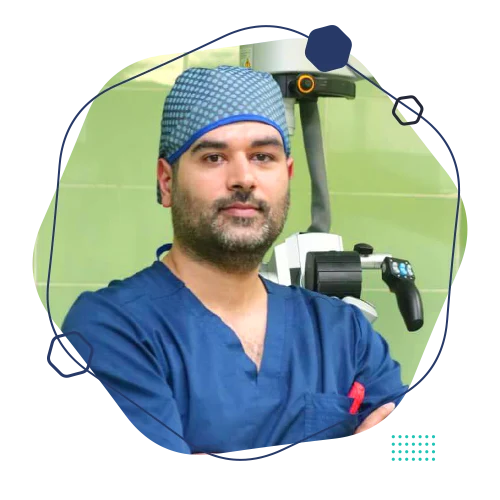
Dr. Yazdan Panahi
Student of Shahid Beheshti University of Tehran. The top rank of the specialized board of neurosurgery. 7-year history of performing complex operations on the base of the skull and brain and spinal cord tumors, 7-year history of complex operations on the spine
Related posts
 Spine and spinal cord
Lumbar disc treatment at home 14 ways to treat lumbar disc at home
Many people prefer to try less risky methods such as lumbar disc treatment at home before undergoing surgery. These methods include medication, physical therapy exercises, limited rest, light physical activity, massage, and techniques such as chiropractic. They aim to reduce inflammation, relieve pain and improve movement, and if done correctly, can speed up the healing process. Stay with us to check more of these items.
Read more » November 19, 2025 4 views Spine and spinal cord
Pain in the back of the neck Investigation of causes, symptoms, diagnosis and treatment methods
Back pain is often caused by muscle problems, improper body posture or erosion of the vertebrae, and sometimes it spreads to the shoulder and head. The cause of pain in the back of the neck and shoulder can be from a simple strain to a protrusion of the disc, and this point tells us what the symptoms of back pain are. Fortunately, most of these pains can be controlled with anti-inflammatory drugs, modification of daily habits and stretching exercises. Only limited cases, due to neurological or structural involvement, will require more advanced treatment methods.
Read more » November 18, 2025 No views the brainBenefits of brain endoscopy + examination of complications and risks
Cerebral endoscopy is a minimally invasive method that is performed by two methods, endonasal and neuroendoscopy, and each has its own advantages and disadvantages. Among the most important advantages of brain endoscopy, we can mention the reduction of manipulation of natural tissues, less pain, faster recovery, better visibility of the surgeon and reduction of the risk of concussion. However, endoscopic complications such as bleeding, CSF leakage, blood pooling, and infection are significant aspects of this procedure. Although there are disadvantages of endoscopy, in most patients the benefits outweigh the possible risks. In the following, the details of both aspects will be examined.
Read more » November 17, 2025 No views Spine and spinal cord
At what age does cervical disc start? + Check symptoms and treatment
Cervical disc usually appears in the third and fourth decades of life, but the onset of cervical disc in youth is not far off with increasing daily pressures. The cause of neck disc in youth is often a combination of bad sitting posture, long-term work with mobile phones and computers, and weak neck muscles. Obesity, inactivity and genetics also accelerate the process of disc erosion and reduce the age of the disease. Premature wear of discs reduces flexibility and increases the possibility of pain and rupture at a young age. Compliance with ergonomics, muscle strengthening and regular activity are the best ways to prevent and postpone this complication.
Read more » November 16, 2025 No viewsWrite your opinion Cancel reply
مقالات دیگر از Dr. Mahmoud Yazdan Panahi
طرز خوابیدن کسانی که دیسک کمر دارند
طرز خوابیدن کسانی که دیسک کمر دارند آخرین بروزرسانی: 08 دسامبر 2025...
بهترین غذا برای دیسک کمر
بهترین غذا برای دیسک کمر آخرین بروزرسانی: 06 دسامبر 2025...

بیرون زدگی دیسک گردن مهره 4 و 5
بیرون زدگی دیسک گردن مهره 4 و 5 آخرین بروزرسانی: 06 دسامبر 2025...

تغذیه بعد از عمل دیسک کمر | تغذیه ممنوعه بعد جراحی دیسک کمر
تغذیه بعد از عمل دیسک کمر | تغذیه ممنوعه بعد جراحی دیسک کمر آخرین بروزرسانی: 03 دسامبر 2025...

بیرون زدگی دیسک گردن مهره 4 و 5 | علائم، درمان و علت
بیرون زدگی دیسک گردن مهره 4 و 5 آخرین بروزرسانی: 02 دسامبر 2025...
تغذیه بعد از عمل دیسک کمر | بعد عمل دیسک کمر چی بخوریم؟
تغذیه بعد از عمل دیسک کمر | تغذیه ممنوعه بعد جراحی دیسک کمر آخرین بروزرسانی: 01 دسامبر 2025...
تشخیص دیسک کمر | 4 علائم شایع دیسک کمر
تشخیص دیسک کمر | از کجا بفهمیم دیسک کمر داریم؟ آخرین بروزرسانی: 30 نوامبر 2025...

سخت ترین عمل جراحی مغز | عوارض + انواع جراحی های مغز
سخت ترین عمل جراحی مغز آخرین بروزرسانی: 29 نوامبر 2025...
دیسک گردن و بی حسی صورت | دیسک گردن و بی حسی سر
دیسک گردن و بی حسی صورت آخرین بروزرسانی: 25 نوامبر 2025...

جراحی آندوسکوپی مغز | انواع عمل آندوسکوپی مغز +مزایا و عوارض
جراحی آندوسکوپی مغز | عمل جراحی آندوسکوپی مغز آخرین بروزرسانی: 16 نوامبر 2025...

روش های تشخیص دیسک گردن | 4 روش اساسی در تشخیص دیسک گردن
روشهای تشخیص دیسک گردن | اهمیت تشخیص به موقع چیست؟ آخرین بروزرسانی: 15 نوامبر 2025...

مزایا آندوسکوپی مغزی + بررسی عوارض آندوسکوپی مغزی
مزایا آندوسکوپی مغزی + بررسی عوارض و خطرات آخرین بروزرسانی: 17 نوامبر 2025...

SEO site management services
Search engine optimization (SEO) services help you to rank your website higher in the search results of Google and other search engines.

Implementation of branding and digital advertising
Digital branding means creating a strong and distinctive brand in the digital space for a company or a specific product. This process involves using digital methods and strategies to build and strengthen the brand.

Website design for companies and businesses
Website design for companies and businesses can help you have a stronger online presence and attract more customers. Contact us for more information.
