
Sacrifice schema; An unhealthy sacrifice that you should take seriously

Sacrifice scheme; An unhealthy sacrifice that you should take seriously
Sacrifice schema; An unhealthy sacrifice that you should take seriouslyWhen you forget yourself: a look at the schema of sacrifice
At first glance, being with others and supporting those around you is an admirable behavior. Humans naturally tend to be together and rush to help each other in times of difficulty; But sometimes some people cross the line of balance and reach a point where they consider themselves obliged to sacrifice for others always and in any situation. These people struggle with an unhealthy mental pattern called "sacrifice schema".
In this pattern, a person ignores his desires, feelings and even basic needs in order to gain the satisfaction of others. If he steps away from this process for a moment or cares about himself, he is faced with feelings of guilt, discomfort or even worthlessness.
These people often appear in the role of savior, but in reality they slowly sink into the role of victim. In the continuation of this article, we will take a closer look at the concept of self-sacrifice schema, its symptoms, the psychological roots of this schema, and the methods of treatment and liberation from this unhealthy cycle.


The Sacrifice Schema: When Sacrifice Becomes a Trap
At first glance, being with others and supporting those around you is an admirable and human behavior. We all have a natural tendency to rush to help each other in times of trouble; But sometimes some people cross the line of balance and reach a point where they consider themselves obliged to sacrifice for others always and in any situation. These people struggle with an unhealthy mental pattern called "sacrifice schema".
In this pattern, a person ignores his basic desires, feelings and needs in order to gain the satisfaction of others. If he steps away from this cycle or cares about himself for a moment, he is faced with a wave of guilt, anxiety or even worthlessness. These people often appear in the role of "saviors", but in reality they slowly sink into the role of "victims".
In this article from Pirouz Psychology Clinic, we will examine the schema of self-sacrifice, its symptoms, its psychological roots and effective methods to get rid of this unhealthy cycle.

What is the sacrifice schema?
Sacrifice refers to a constant pattern of extreme focus on the needs of others in daily life, at the cost of neglecting one's own needs. These people often ignore their own wants and needs to avoid upsetting others or to reduce their selfish guilt. Sometimes their self-sacrifice originates from empathy and great sensitivity towards the pain and suffering of others.
(Young, Jeffrey; Klosko, Janet; Weishar, Marisa. (2014). Scheme Therapy. Translation: Hassan Hamidpour and Zahra Indoz. Tehran: Arjamand Publications).
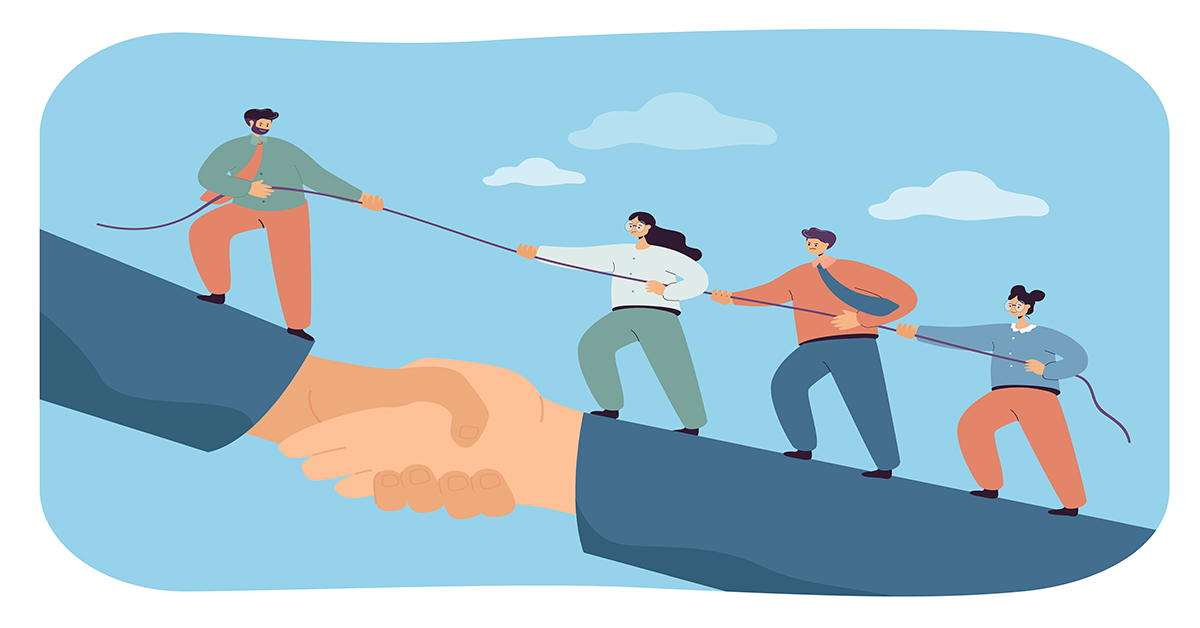
Specific signs in people involved in the self-sacrifice schema
Knowing the characteristics of people who are trapped in the sacrifice schema can be an important step in the path of awareness, control and treatment of this unhealthy mental pattern. In the following, we mention their most prominent features:
- These people usually ignore their own needs and priorities in order to fulfill the wishes of others. Unlike those who are influenced by the obedience schema, they make this sacrifice not out of compulsion, but by believing in its correctness.
- Their view of others is that those around them always need help, especially those they care about the most. As a result, they spend all their energy on solving the problems of their loved ones, even if it is to the detriment of their health or personal peace.
- Their sense of responsibility towards others is more than usual. For this reason, they consider themselves obliged to meet the needs of others in any situation, even when they are physically or mentally tired and weak.
- This pattern sometimes shows itself as physical problems; such as scattered pains, lethargy, digestive disorders or chronic headaches. Despite these symptoms, they don't want anyone to take care of them and prefer to continue playing the role of caregiver.
- On the surface, they don't have any expectations from others, but in their hearts, if their love is not reciprocated or unrequited, they get upset and resentful.
- They believe that they are free to choose this path and love others of their own free will, but they often do not accept that these behaviors originate from a deep-rooted and unconscious schema.
- They are usually very cautious in expressing their personal needs and prefer not to talk about their problems. Instead, they become constant listeners of other people's pain and focus on supporting those around them.
- They often have extensive social relationships, because their unceasing affection makes them a lovable and trusted friend to others.
The difference between real sacrifice and sacrifice schema
On the surface, sacrifice and sacrifice always seem admirable; But is everything that we call sacrifice healthy and useful? Sometimes, behind these seemingly altruistic behaviors, an unhealthy and unconscious pattern is hidden, which is called "sacrifice schema".
True altruism and altruistic schema both ostensibly deal with helping others, but actually have very different origins, intentions, and consequences.
What is true sacrifice?
True self-sacrifice means that a person helps others voluntarily, knowingly and out of love and empathy. In this type of sacrifice, a person neither forgets himself nor feels forced; Rather, he experiences a feeling of satisfaction, peace and a mutual relationship.
What is the sacrifice schema?
Sacrifice schema is an unconscious mental pattern that is usually formed in childhood. People with this schema feel that their worth depends on pleasing others. They ignore their own needs to receive love, approval or avoid rejection and are always at the service of others, even at the cost of their physical and mental exhaustion.

Comparative table: real sacrifice vs sacrifice schema
comparison True sacrifice Sacrifice schema The main motivation Love, empathy and free choice Fear of rejection and need for approval from others Feeling after help Contentment and inner peace Tiredness, hidden resentment and guilt when saying no Pay attention to your needs Yes, along with helping others No, completely ignoring your own needs A sense of control over behavior A person feels selective The person feels compelled to sacrifice The result for the individual Healthy relationships and high self-esteem Burnout, hidden anger and unhealthy attachmentThe roots of the formation of the sacrifice schema in the path of growth and education
The self-sacrifice pattern does not appear accidentally or suddenly in adulthood, but is the result of years of experience, learning and direct or indirect messages from childhood and adolescence. Many people who are involved in this schema have experienced patterns during their growth that led them to ignore themselves and prioritize others.
The most important educational and developmental factors that create the basis for the formation of this unhealthy pattern:
1. Too much parental pressure to be perfect
Children who are constantly under the microscope of parents with high expectations learn that they must be perfect and always helpful. As a result, in order to gain satisfaction, they try to put the wishes of others before their personal needs.
2. Receive love conditional on sacrifice
Some children only get the attention and love of their parents or people around them when they do something for others. This subtle message is institutionalized in the child's mind that "being lovable" depends only on serving others.
-
Ignoring the needs of the child
A child who has been ignored many times in expressing his needs or felt that his feelings and desires are unimportant, gradually learns to forget himself so as not to get into conflict or trouble.
4. Modeling and encouraging self-neglect
Many elders encourage the child to get over themselves, either by direct speech or behavior. Sayings like "Don't upset yourself, the important thing is that mom is comfortable" or "A good kid always takes care of his younger sister" strengthen the foundations of this schema.
5. Early acceptance of the caregiver role
Sometimes a child or a teenager is forced to play the role of a supporter or caregiver for various reasons such as a parent's illness, divorce or family problems. This early experience of adulthood makes him suppress his needs and consider caring for others as the main priority in his life.
Awareness of these transformational roots is an effective step in the path of healing the self-sacrifice schema and rebuilding a person's healthy relationship with himself and others. In schema therapy sessions, experts will help you to identify, understand and modify these patterns over time.

How to get rid of the schema of sacrifice?
If you also feel that you spend too much time and energy on others, even when you are tired or bored, you may be trapped in the self-sacrifice pattern. Fortunately, there are ways to break free from this unhealthy mental pattern:
1. specialized treatment with schema therapy
One of the most effective ways to reduce and treat the self-sacrifice schema is to see a therapist who specializes in schema therapy. In this approach, the deep roots of this psychological schema are examined and incompatible beliefs are replaced with the help of specialized techniques.
During the sessions, the therapist helps the person to:
- Identify schema-shaping experiences.
- Rebuild healthy boundaries between yourself and others.
- Prioritize your personal needs without feeling guilty.
2. Strengthening the skill of "saying no"
Learning that you don't always have to say yes to every request is a life-saving skill. People involved in the self-sacrifice pattern usually experience anxiety or remorse for saying no, but with targeted exercises, this behavior pattern can be corrected.
Suggested exercise:
If you don't have enough energy or time, respectfully but firmly say no. Then write down and analyze your feeling.
3. Self-love and self-esteem
It is important to learn that you deserve care and attention as much as others deserve support. The development of self-love makes you less need external approval and avoid extreme sacrifices.
Solutions to strengthen self-love:
- Practice talking to yourself kindly.
- Meeting your physical and spiritual needs, without feeling guilty.
- Allocating time in the day just for yourself.
Introduction of Pirizh Clinic services
Pirizh Specialized Clinic is ready to provide professional services for the treatment of self-sacrifice schema, failure schema and other incompatible behavioral patterns by using experienced therapists in the field of schema therapy.
To book a counseling session, call the contact number listed on the main page of the site and take an effective step to improve your quality of life.
If you feel like you always have to take care of others, even when you're not feeling well yourself, it might be a good idea to take a look at your behavior patterns. Knowing the pattern of sacrifice and treating it with the help of a counselor can open a new path of a healthy and balanced life for you.
Make an appointment:
To receive individual advice from the specialists and consultants of Pirouzih Clinic, just call the following numbers:Yeproozi contact number:
 02177431649
Qaitariya contact number: 02126456903
02177431649
Qaitariya contact number: 02126456903
Working hours
days of the week 8:00 – 17:00 Thursday with coordination Friday Holidayhref="tel:+982177431649">021-77431649
Latest content
Behzadi2025-10-16T21:31:24+00:00Behzadi2025-10-16T21:31:24+00:00 October 16th, 2025|no View
Why do some people avoid intimacy? Getting to know the avoidant attachment style is one of the behavior patterns that is rooted in the early life, the avoidant attachment style. The way people to establish [...]

The effect of forgiving betrayal on mental health and emotional relationships
amini2025-08-25T16:04:14+00:00 August 21st, 2025|No view
Can betrayal be forgiven? A psychological look at forgiveness of betrayal. Facing betrayal in an emotional relationship can be one of the heaviest and most complex experiences in life. When trust [...]
Daily visit: 3Register an appointment
You can set up a consultation session through this button...
make appointment amini2025-08-17T12:50:27+00:00Clinic Address
Tehran Province, Tehran, Piroozi St, MFVR+298, IranBranch 1:
Pirooz Branch
No. 1278, No. 1278, 3rd floor - Unit 7, at the beginning of Abuzar Blvd., Pirizi St., Tehran
Contact us
Saturday to Wednesday: 9 am to 9 pm
Yeproozi contact number:
02177431649
Qaitariya contact number: 02126456903
Andrezgo Blvd., between Kaveh Blvd. and Qaitarieh Blvd., in front of the Proud Mosque, No. 134, 2nd floor, unit 3

Pirouzi Clinic is always by your side to achieve your growth and mental health...
About Us
Piirozi Clinic is a center dedicated to personal growth and personal development and skilled psychologists here They play a very important role. This field is dedicated to training people to achieve goals and win in life. Using modern psychological techniques and their experiences, our psychologists provide solutions for the mental and social problems of the clients.
مقالات دیگر از Mohammad Pirizi

چرا تنبیه بدنی کودک اشتباه است؟
چرا تنبیه بدنی کودک اشتباه است؟ چرا تنبیه بدنی کودک راه حل نیست؟ پیامدهای تنبیه بدنی کودک تنبیه بدنی کودک، یکی از رایج ترین و در عین حال آسیب زاترین روش ه...

تاثیر بخشش خیانت بر سلامت روان و روابط عاطفی
تاثیر بخشش خیانت بر سلامت روان و روابط عاطفی آیا می توان خیانت را بخشید؟ نگاهی روان شناسانه به بخشش خیانت مواجهه با خیانت در یک رابطه عاطفی می تواند یکی از س...

چرا بعضی ها از صمیمیت فرار می کنند؟ آشنایی با سبک دلبستگی اجتنابی
چرا بعضی ها از صمیمیت فرار می کنند؟ آشنایی با سبک دلبستگی اجتنابی چرا بعضی ها از صمیمیت فرار می کنند؟ آشنایی با سبک دلبستگی اجتنابی یکی از الگوهای رفتاری که ر...

نشانهها و تاثیرات خاموش طرحواره بازداری هیجانی بر زندگی
نشانهها و تاثیرات خاموش طرحواره بازداری هیجانی بر زندگی وقتی احساساتت را قورت میدهی: نگاهی به طرحواره بازداری هیجانی آیا تا حالا تجربه کردهاید که نتوانید اح...

Treatment of children's learning disorders
Treatment of children's learning disorder Specialized workshop for diagnosis and treatment of learning disorders Important fields of psychology, educational sciences, educational technology, teache...

What is therapy and how does it help us?
**There are different types of treatment, each of which can have different effects on different people.** Counseling sessions can be useful for any person for many reasons... better self-knowledge, r...

Painless suicide
Painless suicide It refers to genes that direct the cell towards programmed death and force it to kill itself. It causes programmed cell death.False beliefs about suicide **false beliefs:** 1... S...

Necessary preparations for marriage
Necessary preparations for marriage One of the necessary preparations for marriage that couples think about is financial preparation, but they do not pay attention to the most important thing, which...

The effect of negativity on the mind
The effect of negativity on the mind Negativeness or the impact of bad events is anything that has a negative and bad nature, such as unpleasant thoughts, negative feelings towards events, etc. It is...

How to have a successful marriage?
How to have a successful marriage?... To know "how to have a successful marriage?" Maybe it's better to first know what marriage is... Marriage means signing an official contract during which both par...

The effect of exercise on mental health
**Effect of exercise on mental health** The effect of exercise on mental health is one of the things that we may have heard less about... In fact, we are all familiar with the benefits of exercise fo...

Feeling rejected
Reject | Types and ways to deal with it Rejection is an internal feeling that a person is experiencing the feeling of being rejected, the idea of being abandoned, not being wanted, not being loved, a...

SEO site management services
Search engine optimization (SEO) services help you to rank your website higher in the search results of Google and other search engines.

Implementation of branding and digital advertising
Digital branding means creating a strong and distinctive brand in the digital space for a company or a specific product. This process involves using digital methods and strategies to build and strengthen the brand.

Website design for companies and businesses
Website design for companies and businesses can help you have a stronger online presence and attract more customers. Contact us for more information.
