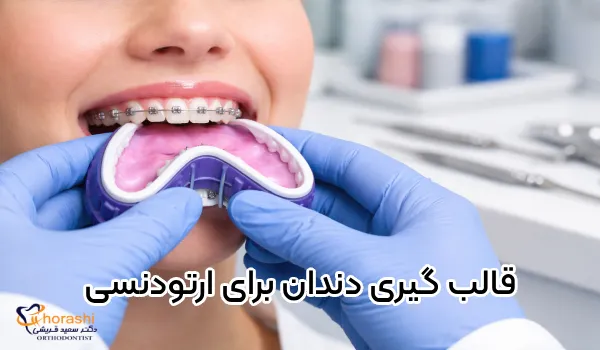

Orthodontic molding is one of the first and necessary stages of treatment, which provides accurate information about the condition of the teeth and jaw to the specialist to give Despite the simplicity of this step, many patients have questions and concerns before doing it.
In this article, we explain in a short and practical way what orthodontic molding is and how it is done, what types it has, and knowing what tips can make this step easier and more bearable.
Orthodontic molding is a method to accurately record the position of the teeth and the upper and lower jaw, which helps the orthodontist to plan the treatment plan accurately. These molds are usually prepared using molding materials such as alginate or by digital method and are the basis for making braces, plaques and other orthodontic tools.
Molding is usually done before the start of the treatment and along with the clinical examination and the necessary imaging, it provides the doctor with complete information about the condition of the patient's mouth and jaw. The accuracy of this step has a direct impact on the quality and predictability of the final orthodontic result.
Does orthodontic molding hurt?
No, orthodontic molding is usually painless. At this stage, the molding material is placed on the teeth and we wait a few minutes for it to harden. There may be a slight feeling of pressure or fullness in the mouth, but this is temporary and not painful at all.
Molding in orthodontics
The main purpose of molding in orthodontics is to accurately record the condition of the patient's teeth and jaw so that the specialist can design the treatment plan with greater accuracy. This stage is the basis of all subsequent stages of treatment and plays an important role in the final result.
Orthodontic molding is usually done with one of two traditional methods (molding materials) or digital (intraoral scanning). The general process is as follows:
- Preparation of the mouth and molding materials
- Placing the molding material on the teeth
- Removing mold from the mouth
- Checking and sending the template to the laboratory
This step is usually short, painless and with the simple cooperation of the patient and is considered the basis for the accuracy and quality of orthodontic treatment.
Useful article: What is hyrax orthodontic appliance?
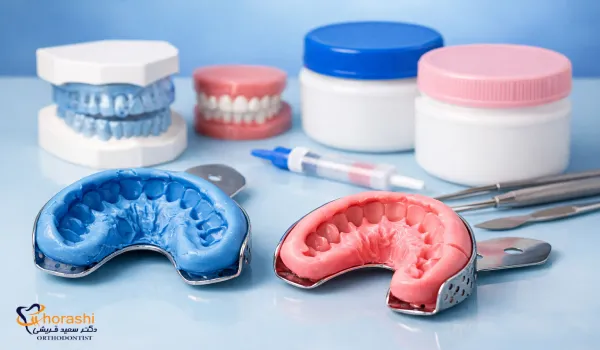
In order to accurately record the condition of the teeth and jaw, various tools are used in orthodontic molding. Choosing the right tool depends on the condition of the patient, the type of treatment and the facilities of the clinic.
Tray formatting
Trays are ready-made molds in which the molding material is placed and placed on the teeth. This tool is available in different sizes to fit the patient's jaw. A more correct choice plays an important role in the accuracy of the final template.
Molding materials
The most common material used is alginate, which is widely used due to its speed of preparation and reasonable cost. In some cases, more precise materials such as silicones are used, which record more details of the teeth and have higher stability.
In new methods, instead of traditional molding, digital scanners are used. By recording 3D images of the teeth, these devices eliminate the need for molding materials and are more comfortable for some patients.
Formatting Tools
Tools such as a spatula to mix ingredients, a timer to control the cooking time, and disinfectants to maintain hygiene form the complementary part of the molding process.
Common for orthodontic molding
Molding materials are used in orthodontics to record the exact shape of teeth and jaw structure. After being placed on the teeth, these materials harden in a short period of time and create a precise pattern of the mouth. The quality of these materials has a direct impact on the accuracy of the mold and ultimately, the treatment result. The most important materials used in orthodontic molding are:
- Alginate
- Polysulfide
- Polyether
- Elastomer materials
- molding silicones
- Digital molding materials (intraoral scan)
template How long does it take to get orthodontics?
The duration of orthodontic molding is usually short and does not last more than 10 to 15 minutes. This time includes preparing the molding material, placing it on the teeth and waiting for the material to harden.
Several factors can change the exact duration:
- Type of molding material (alginate, silicone, polyether)
- The number of teeth or the whole jaw under molding
- Experience and skills of an orthodontic specialist
- Used tools and equipment
Useful article: How long does the first orthodontic appointment take?
After molding, the prepared mold is used to make orthodontic tools. Depending on the type of treatment, this step includes the following:
Template to lab
The casts are sent to the lab to make the brackets, plates, or other tools needed for the treatment. Molding accuracy is very important at this stage, because any small mistake can affect the quality of the final tool.
Check and treatment planning
Orthodontist examines the mold and photos of the teeth and finalizes the exact treatment plan. This includes deciding how to place brackets, schedule sessions, and set up tools.
Next patient meeting class="ez-toc-section-end">
Usually, after the tools are ready, the installation session of brackets or plates is done. The time between molding and tool installation depends on the type of material and the manufacturing process, but in most cases it takes a few days to a week.
Orthodontic molding
Orthodontic molding is usually considered part of the total cost of orthodontic treatment and is not a large separate cost. In many clinics, the cost of molding is considered as a part of the orthodontic tariff and patients do not need to pay separately. Choosing a more precise or digital molding method may cause a little extra cost, but in return it provides higher accuracy and more comfort for the patient.
Concluding remarks
Orthodontic molding is one of the basic and important stages of treatment, the accuracy of which has a direct impact on the final result. This step helps the specialist to correctly record the condition of the teeth and jaw, design the treatment plan more precisely and create personalized orthodontic appliances.
With proper molding and patient cooperation, this process is short and painless and can provide a comfortable and safe experience to begin treatment. Observing simple tips before and during molding, in addition to patient comfort, significantly increases the quality of treatment and the predictability of results.
At Dr. Qureshi's clinic, our goal is to provide an accurate, safe, and stress-free experience for patients so that the orthodontic treatment can proceed from beginning to end with the highest possible quality and satisfaction.