
What is oral cancer? All you need to know about dental cancer!

All about oral cancer
Dr. Mehdi Ali Babaei > Blog > Weblog > Everything about oral cancer
- August 1, 1402
- dr.alibabaei
- Views: 0
- blog
Oral cancer is a broad term for cancer that affects the inside of your mouth. Oral cancer can look like a common problem on the lips or in your mouth, such as white spots or sores that bleed. The difference between a common problem and potential cancer is that these changes don't go away. If left untreated, oral cancer can spread throughout the mouth and throat to other areas of the head and neck. Approximately 63% of people with oral cavity cancer are alive five years after diagnosis.
Who are affected by oral cancer?
Table of Contents
Overall, 11 out of every 100,000 people will develop oral cancer in their lifetime. Men are more prone to oral cancer than women. White people are more likely to get oral cancer than black people.
How does oral cancer affect the body?
Oral cancer can affect your mouth and throat. The oropharynx includes the parts of the tongue and roof of the mouth and the middle of the throat that are visible when your mouth is wide open. Cancer of your oropharynx is called oropharyngeal cancer. This article focuses on oral cancer in your mouth or oral cavity.What parts of my body are in the oral cavity?
- Your oral cavity includes:
- Your lips.
- Your gums.
- The inner lining of your cheeks.
- The first two thirds of your language.
- The floor of the mouth (the part under your tongue).
- The first part of the roof of your mouth.
- The area just behind your wisdom teeth.
What causes oral cancer?
Oral cancer starts in the squamous cells of your oral cavity. Squamous cells are flat and look like fish scales when viewed under a microscope. Normal squamous cells become cancerous when their DNA changes and the cells begin to grow and multiply. Over time, these cancer cells can spread to other areas inside the mouth and then to other areas of the head and neck or other areas of the body.
Are there certain activities that can increase the risk of oral cancer?
About 75% of people who get oral cancer have the following habits:
- They smoke cigarettes, cigars or pipes.
- They use smokeless tobacco products such as chewing tobacco, dip, snuff or water pipes (hookah).
- regularly drink excessive amounts of alcohol.
- To spend a lot of time under the sun without protecting their lips with sunscreen.
- Have human papilloma virus (HPV).
- Have a family history of oral cancer.
It is important to note that 25% of people who develop oral cancer do not smoke or have other known risk factors.
What are the symptoms of oral cancer?
Oral cancer has many signs and symptoms that may be confused with common problems or changes in the mouth. For example, you may notice spots inside your mouth that you can't scrape off. These spots may be precancerous conditions. Symptoms of oral cancer appear as spots in the mouth and throat, but they are different colors.
- Leukoplakia: These are smooth white or gray patches in the mouth or throat.
- Erythroplakia: These red spots are slightly raised or flat. These spots may bleed when scratched.
- Erythrolokoplakia: These spots are red and white.
-
Sores on the lips or inside the mouth that bleed easily and do not heal within two weeks.
- Uneven patches or scaly areas on your lips, gums, or inside your mouth.
- Areas in the mouth that bleed for no apparent reason.
- Numbness, pain, or tenderness in your face and neck or in your mouth that occurs for no apparent reason.
- Difficulty chewing or swallowing, speaking or moving the jaw or tongue.
- Unwanted weight loss
- Earache
- Chronic bad breath
How do dentists diagnose oral cancer?
Your dentist may detect oral cancer during one of your regular checkups. They may follow up on the initial tests or refer you to an oral and maxillofacial surgeon, or a head and neck surgeon. These specialists are also called ear, nose and throat (ENT) specialists.
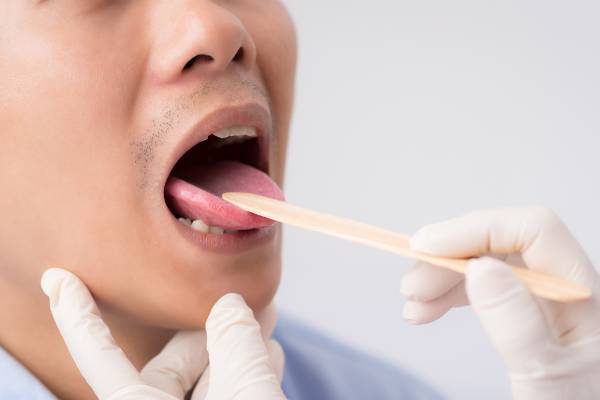
Oral cancer tests include:- Physical examination: The dentist will look inside your entire mouth and may feel around your mouth. They will also examine your head, face, and neck for possible signs of precancer or cancer.
- Brush biopsy, also called scraping biopsy or exfoliative cytology: The dentist uses a small brush or spatula to gently scrape the target area to obtain cells to be examined for cancer.
- Incisional biopsy: Your dentist will remove small pieces of tissue to test the cells to check for cancer.
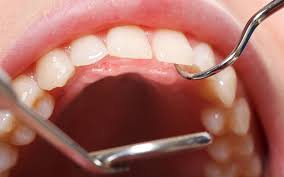
- Indirect laryngoscopy and pharyngoscopy: Your dentist uses a small mirror on a long thin handle to look at your throat, the base of your tongue, and part of your larynx (voice box).
- Pharyngoscopy and direct (flexible) laryngoscopy: An endoscope may be used to see areas of your throat and mouth that cannot be seen with a mirror. An endoscope is a thin and flexible tube with a light and a viewing lens attached.
What surgeries treat oral cancer?
The most common oral cancer surgeries are:
- Primary tumor surgery: The dentist removes the tumors through your mouth or through an incision in your neck.
- Glossectomy: This is partial or complete removal of your tongue.
- Mandibulectomy: This is surgery for oral cancer in your jawbone.
- Maxillectomy: This surgery removes part or all of the hard palate, which is the bony roof of your mouth.
- Sentinel lymph node biopsy: This test helps surgeons know if the cancer has spread beyond the original oral cancer.
- Neck dissection: This surgery is done to remove the lymph nodes from your neck.
- Reconstruction: Surgery that removes large areas of tissue may be followed by reconstructive surgery to fill gaps left by a tumor or to replace part of the lip, tongue, palate, or jaw. In some cases, reconstructive surgery is performed by removing healthy bone and tissue from other areas of your body.
What are other ways to treat oral cancer?
The dentist may combine surgery with other treatments, including:
- Radiotherapy: Radiation therapy uses strong beams of energy to kill cancer cells or prevent their growth. Your surgeon may combine radiation therapy with other treatments.
- Targeted therapy: This cancer treatment uses drugs or other substances to precisely identify and attack specific types of cancer cells without harming normal cells. Monoclonal antibodies are proteins of the immune system that are created in the laboratory and used to treat cancer.
- Chemotherapy: Your health care provider may use anticancer drugs that kill cancer cells, including treatments that affect more parts of your body.
- Immunotherapy: Immunotherapy is a cancer treatment that engages your immune system to fight the disease. Treatment is sometimes called biological therapy.
What can I do to prevent oral cancer?
Oral cancer is preventable and you can play an active role in its prevention. You can help prevent oral cancer by observing the following tips:- If you are someone who smokes, chews, or uses a water pipe, try to quit. Talk to your doctor about smoking cessation plans.
- If you drink alcohol, drink in moderation.
- Remember your sunscreen. Use a UV-AB blocking sunscreen on your face and sunscreen.
- Get vaccinated for human papilloma virus.
- Use a balanced diet.
- Be under regular examination best dentist. People between the ages of 20 and 40 should undergo oral cancer screening every three years and annual examinations after the age of 40.
Write your opinion Cancel reply
مقالات دیگر از Dr. Mehdi Ali Babaei


SEO site management services
Search engine optimization (SEO) services help you to rank your website higher in the search results of Google and other search engines.

Implementation of branding and digital advertising
Digital branding means creating a strong and distinctive brand in the digital space for a company or a specific product. This process involves using digital methods and strategies to build and strengthen the brand.

Website design for companies and businesses
Website design for companies and businesses can help you have a stronger online presence and attract more customers. Contact us for more information.
