
New drug for stroke treatment

New medicine for stroke treatment
- September 15, 2025
- Author: Dr. Majid Kehanifard
- The article has been reviewed and approved by Dr. Majid Kehanifard
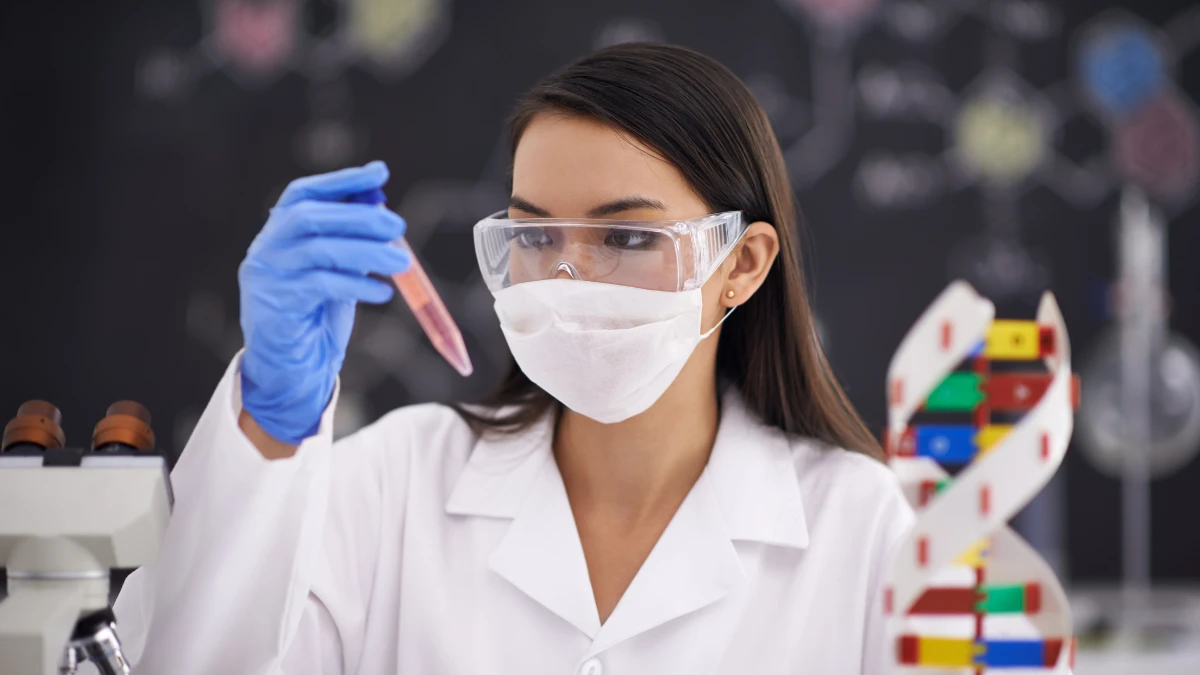
Scientists are continuously looking for better, faster and less complicated ways to treat diseases. including the new stroke drug that is reviewed on a daily basis. A list of these drugs is given here
. TNKase (tenketplase) is a new drug for treating stroke
In March 2025, the US Food and Drug Administration (FDA) approved the drug TNKase for the treatment of acute ischemic stroke. This drug is administered as a rapid injection dose within 5 seconds and significantly reduces treatment time compared to the previous standard drug (Activase) which required a 60-minute intravenous injection. You can read about this drug in this article. https://www.gene.com
2. Sovateltide (Tyvalzi)
Sovateltide, brand name Tyvalzi, is a new drug in India approved for the treatment of acute ischemic stroke. This drug helps to regenerate blood vessels and neurons and prevents complications after stroke. Wikipedia
3. Nelonemdaz
Nelonemdaz is an unapproved but investigational drug that acts as a selective NMDA receptor antagonist and free radical scavenger. This drug is currently in the third phase of clinical trials for the treatment of ischemic stroke. Wikipedia
New treatments and advanced diagnostic technologies in stroke management
A stroke reduces blood flow to an area of the brain, resulting in a lack of oxygen and nutrients in that area, which can lead to irreversible brain damage. With scientific advances and the development of new diagnostic technologies such as encephalography (EEG), MRI imaging and CT brain scan, it is possible to quickly identify the type of stroke and the severity of the injury. In addition, advanced treatments such as RTMS and thrombectomy help restore blood flow and reduce brain damage. In the rest of this article, we will examine the treatment of stroke with new methods, diagnostic technologies and rehabilitation methods such as nerve and muscle tape and their effect on improving the quality of life of patients.
Timely diagnosis is the key to treatment
Quick and accurate diagnosis of stroke is the first vital step in the management of this disease. The services performed at this stage help to identify the type and severity of the stroke and determine the appropriate treatment path. Some of these services include:
- Cerebral Doppler ultrasound (TCD); This non-invasive method uses sound waves to examine blood flow in cerebral vessels. Cerebral doppler helps to identify vasoconstriction or blockage in large cerebral arteries. This tool can be used to prevent stroke in high-risk people, monitor patients after stroke and evaluate treatment results.
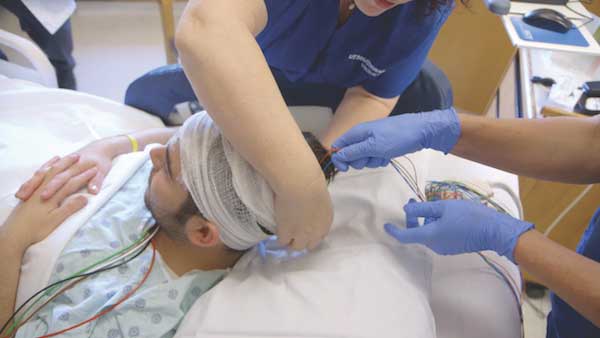
- brain angiography Cerebral angiography is a precise imaging method that is used to check the condition of blood vessels in the brain. By injecting contrast material and performing this test, problems such as blockage of arteries, aneurysm (abnormal protrusion of the artery wall), and vascular abnormalities can be identified. This method plays an important role in planning treatments such as surgery or the use of thrombolytic drugs. Nerve and muscle tape is one of the important diagnostic tools in the evaluation of stroke complications. By recording the electrical activity of nerves and muscles, this method can determine the severity and location of nerve damage. It also helps doctors design more precise rehabilitation programs to restore muscle function.
 Repetitive transcranial magnetic stimulation is a non-invasive treatment method that regulates and stimulates the activity of specific areas of the brain. The image shows the transcranial magnetic stimulation device.
 I recommend reading:
New treatments for stroke and their results
In addition to the new drug for treating stroke that is a It is considered a direct and early treatment method, there have been other advances in the field of this disease, which we describe here.
Cell therapy with stem cells
Cell therapy is one of the most advanced and innovative methods of stroke treatment, which aims to regenerate and repair damaged brain tissues. In this method, stem cells are extracted from various sources such as bone marrow, fat or umbilical cord blood of the patient or donor and after preparation in the laboratory, they are injected into the damaged area of the brain. These cells have the ability to transform into different types of nerve and tissue cells and can improve brain function by directly repairing damaged cells or stimulating the body's natural repair processes. Studies have shown that this method can improve motor function, cognition and even reduce the psychological effects of stroke, and has created new hopes for patients. Intense
Repetitive Transcranial Magnetic Stimulation (RTMS)
This non-invasive method uses magnetic fields to regulate and stimulate the activity of certain areas of the brain. In Repetitive Transcranial Magnetic Stimulation (RTMS), targeted magnetic pulses are used to affect neural networks. This technique can help restore motor functions, improve cognitive abilities and reduce symptoms of depression in stroke patients. Clinical studies have shown that RTMS has an effective role in accelerating the recovery process and reducing neurological disabilities, especially in patients who have suffered an ischemic stroke. In addition, the use of this method, due to its non-invasive nature, has few side effects and is widely used in patient rehabilitation protocols. For more information, see the article RTMS
I recommend reading:
Mechanical thrombectomy
Mechanical thrombectomy is one of the interventional methods. It is advanced and effective for the treatment of ischemic stroke, which aims to quickly remove blood clots from blocked arteries in the brain. In this method, a special device (such as a catheter or stent) is inserted through the artery and removes the clot directly. This process restores blood flow in the shortest possible time and prevents further damage to the brain tissue.
Thrombectomy is usually performed in the golden time (usually within 6 hours of symptom onset) and can provide better results when combined with thrombolytic drugs. This method is especially effective for patients with severe occlusion of large cerebral vessels, where clot-dissolving drugs alone are not enough, and plays a key role in reducing the long-term complications of stroke.
Other new drugs for stroke treatment
Drug therapy is one of the main approaches to stroke management, which has been accompanied by significant advances. Advanced anticoagulants such as apixaban are specifically designed to prevent strokes caused by heart disorders such as atrial fibrillation. These drugs prevent blockage of cerebral vessels by reducing the risk of blood clot formation. Also, thrombolytic agents such as Tenecteplase, which are used to treat acute strokes, restore blood flow by rapidly dissolving obstructing blood clots and prevent the spread of brain damage. The use of these drugs, especially in the early hours after the onset of symptoms, can significantly increase the patient's chance of recovery. These advances have made the drug treatment of stroke effectively help to reduce complications and improve the quality of life of patients.
Role of diagnostic and treatment services in stroke
Advanced diagnostic tools play an important role in stroke management. These technologies enable quick and accurate identification of the type, location and severity of damage. Doppler ultrasound evaluates the blood flow in cerebral vessels. Brain angiography is used to identify blockages or vascular abnormalities. Advanced imaging such as MRI and CT scans provide detailed information that is critical for treatment decisions.
In addition, modern medical services have a significant impact on reducing brain injuries. Mechanical thrombectomy and advanced drugs such as thrombolytic and anticoagulant agents help patients recover. These methods reduce the risk of long-term complications and improve the quality of life of patients. Also, they allow them to return to their daily activities faster.
New methods of rehabilitation after stroke
After managing the acute condition, the rehabilitation of patients is very important. Some new rehabilitation methods include: Functional Electrical Stimulation (FES); FES uses electrical current to stimulate weak or paralyzed muscles and helps restore normal movement by activating the associated nerves. This method is especially effective in patients with partial or complete paralysis and can accelerate the recovery process and increase their motor independence.
 Robotic rehabilitation is one of the new rehabilitation methods after stroke that you can see in the picture.
 Conclusion
Recent advances in the diagnosis, treatment and rehabilitation of stroke have been able to create new hopes for the management of this disease. Modern diagnostic tools and new treatment methods have helped to reduce the mortality and disabilities caused by stroke. Also, advanced rehabilitation methods allow patients to regain their lost abilities and improve their quality of life. These advances show that a comprehensive approach including rapid diagnosis, targeted therapies and effective rehabilitation can dramatically change the course of stroke treatment.
Categories:
medications and drug treatmentsstroke Dr. Majid Kihani Fard
Dr. Majid Kihanifard was born in 1352 in Isfahan. He completed his general medical education at Isfahan University and specialized neurology course at Shahid Chamran University of Ahvaz and completed his knowledge and skills by completing a subspecialty fellowship in cerebrovascular surgery in Switzerland. He has always been a pioneer in providing new treatments and effective research, especially in the field of MS and stroke prevention, by emphasizing on increasing the health level of the society, informing the patients and respecting the patient. Dr. Kihanifared has been awarded the title of "Best neurologist in Isfahan" by the provincial medical system organization and has played an effective role in improving patient care services with applied research and advanced surgeries. Related Articles
Dr. Majid Kihani Fard
Dr. Majid Kihanifard was born in 1352 in Isfahan. He completed his general medical education at Isfahan University and specialized neurology course at Shahid Chamran University of Ahvaz and completed his knowledge and skills by completing a subspecialty fellowship in cerebrovascular surgery in Switzerland. He has always been a pioneer in providing new treatments and effective research, especially in the field of MS and stroke prevention, by emphasizing on increasing the health level of the society, informing the patients and respecting the patient. Dr. Kihanifared has been awarded the title of "Best neurologist in Isfahan" by the provincial medical system organization and has played an effective role in improving patient care services with applied research and advanced surgeries. Related Articles July 28, 2025

Author: Dr. Majid Kihanifard
Sinus headaches: why they happen and how to get relief?
July 15, 2025
Author: Dr. Majid Kehanifard
treating headaches with cold compresses- fast headache treatment
July 14, 2025
Author: Dr. Majid Kehanifard
Severe Headache Quick Cure at Home in Less Than 10 Minutes
May 25, 2025

Author: Dr. Majid Kehanifard
side effects of antidepressants
May 14, 2025

Author: Dr. Majid Kehanifard
Symptoms of generalized anxiety disorder in adults
May 12, 2025.
Author: Dr. Majid Kehanifard
May 11, 2025

Author: Dr. Majid Kehanifard
How can I deal with social anxiety?
May 11, 2025

Author: Dr. Majid Kehanifard
May 11 2025. src="https://drmkeyhanifard.com/wp-content/uploads/2025/03/dr-kehanifard.webp">
Author: Dr. Majid Kehanifard
April 19, 2025. Fred
Plasmapheresis: Treating Autoimmune Diseases to Cancer with Plasmapheresis
April 9, 2025
Author: Dr. Majid Kehanifard
What are the warning signs of neurological diseases?
April 8, 2025
Author: Dr. Majid Kehanifard
Epilepsy treatment – what is the best treatment for epilepsy patients?
Drug Library
Find all neurologic drugs here
Write your opinion Cancel response
مقالات دیگر از Dr. Majid Kihani Fard


SEO site management services
Search engine optimization (SEO) services help you to rank your website higher in the search results of Google and other search engines.

Implementation of branding and digital advertising
Digital branding means creating a strong and distinctive brand in the digital space for a company or a specific product. This process involves using digital methods and strategies to build and strengthen the brand.

Website design for companies and businesses
Website design for companies and businesses can help you have a stronger online presence and attract more customers. Contact us for more information.
