
Nasal edema after surgery



Positive nasal edema after surgery
Summary of content (click)
Usually, surgeries are associated with postoperative complications, which in most cases are not serious and do not pose a risk to the applicant if the doctor's instructions are followed. Nasal swelling after surgery is one of the expected side effects after nose surgery, which needs time to subside.
The nose is made up of cartilage, skin and bone, and it may take several months to completely resolve nasal swelling after surgery. In this article, we'll cover what you need to know about swelling after nose job and what to expect during recovery. Also, we'll talk more about the care and actions you can take to speed up recovery and eliminate swelling completely.
Types of post-operative rhinosinusitis
Generally, there are two types of nasal swelling after surgery; One of them is acute rhinitis that occurs immediately after nose surgery.
Acute swelling is completely clear and there is no need to worry; Because it is simply due to the inflammation caused by the cosmetic surgery of the nose, which occurs at the same time as the bruise.
Another type of rhinitis is long-term swelling caused by fluid retention in the lower layers of the skin. This type
Usually the tip of the nose needs more time to heal than other places. Fortunately, there are various home remedies for post-op rhinitis that you can try:
How to fix nasal congestion after surgery?
Continue When is the best age for nose surgery?
If the above home measures are not effective in eliminating nasal swelling, you can visit a doctor to reduce the swelling by injecting corticosteroids into the nose.
You can also ask your doctor to teach you the correct way to massage the nose; Because the way of massaging and hand pressure is very important, and in case of improper massage, you may damage your nose.
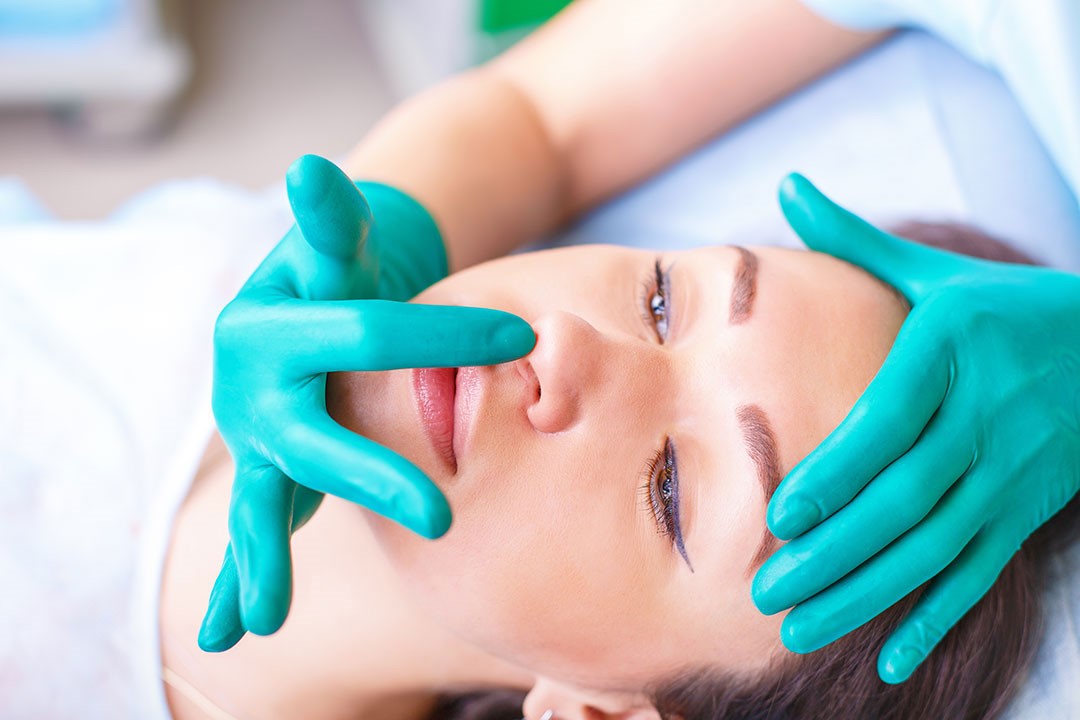
Cortone injection to remove nasal polyps after surgery
If the swelling in your nose does not go away, the surgeon may inject a substance from the corticosteroid family into your nose to remove the swelling.
Cortone should be injected by a skilled doctor with a low dose so that it does not cause any risk or side effects to the patient. Cortone injection after surgery does not have a specific time; Usually, this time is diagnosed by the doctor, which in most cases is one to three months after the surgery.

Unilateral swelling of the nose after surgery
One of the common problems after nose surgery is swelling on one side of the nose, which should be resolved over time. Massage and corticosteroid injections are effective in solving this problem; But if the swelling of one side of the nose does not go away after a few months, you should discuss the problem with your doctor so that he can guide you in this matter.
In some cases, surgery is performed again to correct the shape of the nose; But you should not rush about this issue, because the final result of the surgery will not be known until one year after the operation.
What is the proper diet after nose surgery?
After nose surgery, to reduce nasal swelling, especially post-operative nasal swelling, you should not use spices that cause nasal congestion and swelling. Using the following foods in your diet is useful for reducing nasal swelling after surgery:
- Pineapple or pineapple capsule because of the bromoline enzyme in it to heal wounds and swelling of the nose
- Celery juice with puree to improve nasal swelling
- fiber foods
To speed up the healing process, reduce your salt intake as much as possible. Reducing salt consumption prevents fluid retention under the skin.
What factors affect nasal swelling?
There are several factors that affect the degree of swelling and fluid retention after surgery. The main of these factors is the thickness of the skin.
Meaty noses usually have thick skin as well; And the thicker the skin, the higher the swelling of the nose after surgery.
For this reason, before performing nose surgery, the doctor should advise the patient about the thickness of the skin of the nose and inform him of the expected swelling of the nose after the surgery.
Swelling of the skin may take months to completely resolve, and the result of the nose job will be visible after one year. So be patient to see the result.

Recovery period after nose surgery
The recovery period of rhinoplasty and the complete removal of nasal swelling after the operation is about 6 weeks. In different weeks, the condition of the nose changes, which we will continue to explain in full each week of the recovery period.
First week
Immediately after nose surgery, a splint is used to help control swelling. The splint is usually removed after a week. After removing the splint, the nose will look very swollen, which should not cause you panic.
In the first week, no results of the surgery can be seen, and the swelling of the nose is at its worst in the first week and gradually decreases.
Second week
In the second week, the nose is still swollen; But you can see that it has decreased compared to the first week and it is gradually subsiding.
read more about crooked nose surgeryIt is better to take two weeks off from your daily activities such as work and school after nose surgery so that you can Rest and heal.
Third to fourth week
Usually, the inflation subsides to a large extent after this period. Most people can see the result and evaluate their new look by this point.
In general, by the end of the first month, up to 90% of the nasal swelling should be gone.
5th to 6th week (second month)
After the first month, there will still be some swelling, but it will likely not be very noticeable and will have subsided a lot. Minor changes in the results of nose surgery may be observed in the first year.
At the end of 12 to 18 months after the surgery, the bony rhinitis and the fleshy rhinitis will disappear completely.
Conclusion
We know that waiting to see the result of rhinoplasty is very difficult, but it is important to be patient. After the first few weeks, you'll get a glimpse of your new nose and be able to evaluate your new look.
If you feel that your nose has not changed in the first month, don't worry. This is completely normal. Nasal swelling after surgery needs time to heal; After spending the first 3 months after rhinoplasty, you can enjoy the new look of your nose and be more confident about the results of the operation. So don't rush to conclusions.
Write your opinion Cancel Answer
About Dr. Rahmati
Subspecialist in plastic, cosmetic and reconstructive surgery, associate professor and faculty member of Tehran University of Medical Sciences, member of the Iranian Plastic Surgeons Association
Most visited articles

Arm surgery with laser
Read the article »
What is tip plastic surgery?
Read the article »
Care after ear surgery
Read the article »Newsletter
Dr. Javad Rahmati cosmetic surgery weekly
Enter your email address in the box below to receive the latest educational and medical articles :)
Facebook Twitter YoutubeTop articles
Arm surgery with laser
September 3, 1402
What is tip plastic surgery?
August 30, 1402
Care after ear surgery
August 24, 1402Communication with us
- 5th floor, unit 21, doctors' building 2016, corner of Koche Ya Nabavi, above Qaitarieh metro station, Tehran, Shariati St.
- 09029191026 - 02122240061 - 02126768159
- Free consultation: 09029191026
All rights of this website belong to Dr. Javad Rahmati, specialist in plastic, cosmetic and reconstructive surgery
مقالات دیگر از Dr. Javad Rahmati

مراقبت بعد از عمل جراحی گوش
...

آیا چسب زدن بینی بدون عمل تأثیر دارد؟
...

عمل تیپ پلاستی چیست؟
...

جراحی بازو با لیزر
...

جراحی جینوپلاستی
...

آشنایی با لیپوساکشن غبغب و چگونگی انجام آن
...

جراحی ماموپلاستی چیست و چگونه انجام می شود؟
...

عمل بینی چیست؟ + عکس و فیلم
...

نمونه کارهای دکتر جواد رحمتی
نمونه کار راینوپلاستی دکتر جواد رحمتی نمونه کار بلفاروپلاستی دکتر جواد رحمتی نمونه کار راینوپلاستی دکتر جواد رحمتی نمونه کار رینوپلاستی دکتر جواد رحمتی نمونه کار ابدو...

جراحی پروتز سینه؛ بررسی انواع، مراقبت ها و عوارض
...

جراحی لیفت سانترال لب و نکات مهمی که در مورد آن نمیدانید!
...

جراحی بلفاروپلاستی و ناگفتههای آن
...

SEO site management services
Search engine optimization (SEO) services help you to rank your website higher in the search results of Google and other search engines.

Implementation of branding and digital advertising
Digital branding means creating a strong and distinctive brand in the digital space for a company or a specific product. This process involves using digital methods and strategies to build and strengthen the brand.

Website design for companies and businesses
Website design for companies and businesses can help you have a stronger online presence and attract more customers. Contact us for more information.
