
How to stop the bleeding of an extracted tooth? - Dentistry of Dr. Benianian - specialized implant clinic in Tehran

How to stop the bleeding of an extracted tooth?
Home - Oral and dental surgery articles - How to stop the bleeding of an extracted tooth?- Publication date: 05/07/1404
- Editing date: 05/11/1404
- 0 views
- Study time: 8 minutes
- Confirmed by: Dr. Nazi Banianian

Why does the extracted tooth not stop bleeding?
- High blood pressure
- Use of blood thinners
- Diabetes or underlying diseases
- Infection of the extracted tooth
- Smoking or consuming Alcohol
How to stop the bleeding of a pulled tooth?
- Bite of sterile gauze with gentle pressure
- Using cold tea bags
- Ice compress on the cheek
- Sitting upright
- Avoid physical activity and smoking
Approved by Dr. Benianian dental specialists
The content of this article is only to increase your awareness. Before taking any action, consult Dr. Benyanian's dentistry for treatment.
Pull-tooth, especially in the posterior teeth and the end of the jaw, is one of the most common solutions that dentists use to relieve pain, prevent the spread of infection, or treat advanced gum disease.
However, one of the common concerns of people who had to pull their teeth is how to stop the bleeding of the extracted tooth.
Of course, some mild and temporary bleeding after tooth extraction is normal. But sometimes this bleeding becomes so intense and prolonged that the patient is worried about its severity. So knowing the ways to control and stop the bleeding of an extracted tooth is not so bad! Because in addition to reducing the patient's anxiety, it also helps to heal the wound faster, reduce pain and prevent complications such as drying of the tooth cavity.
In this article from Dr. Benianian's dental website, we will teach you how to stop the bleeding of an extracted tooth in a correct and basic way and we will also check with you what factors may prevent the bleeding of an extracted tooth from stopping.
Why bleeding happens after tooth extraction. Does it fall out?
When the tooth comes out of the gum, an empty cavity is left in the jawbone. This cavity has a large amount of blood vessels that are torn by tooth extraction. So, naturally, blood comes out of these vessels.
The body itself tries to stop the bleeding through the formation of a clot. But some factors can disrupt or slow down this process. Factors including:
- High blood pressure
- Use of blood thinners (such as aspirin or warfarin)
- Presence of underlying diseases such as diabetes
- Smoking or drinking alcohol
- High activity after tooth extraction

The effect of blood pressure on not stopping the bleeding of an extracted tooth
One of the important factors that can cause problems in stopping the bleeding of an extracted tooth is the high blood pressure of patients. Because in patients with high blood pressure, the blood vessels are less able to contract due to constant tension, and this causes the process of blood clotting and stopping the bleeding to not be carried out properly.
So when the patient naturally has higher than normal blood pressure, the bleeding of his extracted tooth may stop later than another patient (disease with normal blood pressure).
This is why we at Dr. Banyanian's dental clinic, always before starting the treatment of We will inquire about your blood pressure.
Read more: When should teeth be extracted
The role of blood thinners on tooth bleeding
Drugs such as aspirin, warfarin, plavix and some types of supplements such as oil Fish have anti-coagulant properties and prevent the rapid formation of a clot in the place of the extracted tooth. As a result, the possibility of not stopping the bleeding of an extracted tooth is higher in patients using these drugs.
In this situation, even a slight bleeding may continue for hours. Therefore, it is necessary for the patient to inform his dentist about the use of these drugs before performing any dental surgery, so that, if necessary, consultation with the attending physician can be done to change the dosage or temporarily stop the drug.
What effect does the presence of underlying diseases have on the bleeding of an extracted tooth?
Diseases such as uncontrolled diabetes, blood disorders (hemophilia), severe anemia, and liver diseases can also directly disrupt the process of wound healing and blood clotting of an extracted tooth. Because these diseases cause weak platelet function or decrease blood coagulation speed. As a result, even with all precautions taken, the bleeding of an extracted tooth stops later in these patients.
Effect of smoking and alcohol on the bleeding of an extracted tooth
Consumption of cigarettes and alcoholic beverages after tooth extraction is one of the most important factors in increasing the possibility of bleeding of an extracted tooth.
You should know about smoking that the nicotine in it narrows blood vessels and reduces oxygen supply to tissues. As a result, it slows down the healing process of the wound and prevents the stable formation of a clot.
Alcohol also increases the possibility of bleeding from the extracted tooth by diluting the blood and increasing blood pressure.
It is for these reasons that it is recommended to avoid smoking and alcohol for at least 48 to 72 hours after tooth extraction.

The role of a lot of activity after pulling a tooth on the non-stopping of blood
Doing vigorous physical activities or even moving a lot immediately after pulling a tooth can all be important reasons for not stopping the bleeding of a pulled tooth.
For example, exercising, bending Standing, lifting heavy objects, or even walking for long periods of time can somehow increase blood pressure and increase blood flow to the surgical area. As a result, the clot formed at the site of the wound may be moved or destroyed and the bleeding of the extracted tooth starts again.
Effective methods to stop the bleeding of an extracted tooth
To control and stop bleeding after tooth extraction, you must take a series of quick and basic measures. Usually, dentists who extract a patient's tooth, after completing this dental surgery process, provide the necessary explanations to their patient.
But if the stress of the surgery does not allow you to listen to your dentist and do not understand what his recommendations are exactly, seek help from the following guide.
1. Use of sterile gauze (direct compress)
After tooth extraction, the dentist will place a sterile gauze on the area of your tooth extraction. You should:
- Bite the gauze with gentle pressure for 30 to 45 minutes.
- Avoid sucking the gauze or talking.
- If the gauze is filled with blood, replace it with a new gauze with a clean hand.
2. Using a cold compress
One of the best and most effective things you can do to stop the bleeding of an extracted tooth and reduce your inflammation is to use a cold compress on the outer area of the jaw and cheek. Because the coldness of the ice causes the blood vessels to narrow and prevents the continued bleeding of the extracted tooth. To do this:
- Wrap an ice pack or a frozen pack (like frozen peas) in a towel or thin cloth.
- Place it on the cheek on the same side as the extracted tooth for 15 to 20 minutes.
- Then rest for about 10 minutes and repeat the compress if needed.
3. Using tea bags
Tea contains tannic acid and has astringent properties. That is, it helps to form a clot. To do this, you can:
- soak a tea bag (regular, not herbal like green tea) in cold water.
- Place it directly on the bleeding area (that is, remove the sterile gauze and replace the tea bag with it).

Prohibited actions to stop bleeding from a pulled tooth
There are some behaviors that can move the blood clot formed on the site of your pulled tooth and thus cause you to start bleeding again.
For this reason, the dentists of Dr. Benianian Dental Clinic advise you to avoid the following things for the first 24 hours after tooth extraction:
- Sucking with a straw or gargling anything (even salt water and mouthwash)
- Brushing the wound area
- Consuming hot drinks or solid food
- Extreme physical activity
- Smoking or Hookah
- Sleeping on the same side
What are the reasons for continued bleeding from an extracted tooth?
If you were still experiencing bleeding from an extracted tooth despite following the things we explained above, one of the following medical problems may be the main reason for this prolonged bleeding.
For example, people with high blood pressure usually experience delayed bleeding. Because their blood vessels are under more pressure and this high pressure can prevent the formation of a stable clot. So it is better to go to a cardiologist instead of a dentist.
If you also use anticoagulants (such as aspirin, warfarin or Plavix), it is possible that your blood will not clot easily and your tooth will continue to bleed for several hours.
In some cases, especially after wisdom tooth extraction, An infection may develop at the wound site, which destroys the blood clot and causes the bleeding to start again.

Signs of abnormal bleeding after tooth extraction
Signs of abnormal bleeding after tooth extraction indicate a disturbance in the process recovery or the presence of an underlying medical problem. In some cases, problems such as remaining roots in the gums after tooth extraction can also lead to continued bleeding or inflammation. So, if you encounter unusual symptoms, it is better to contact your dentist immediately. The most important signs of abnormal bleeding of an extracted tooth: severe and non-stop bleeding for more than 2 hours, no blood clot formation, persistent taste of blood in the mouth, high swelling, fever. href="https://drbonyanian.com/mag/why-doesnt-tooth-numbness-go-away/">Tooth numbness and jaw for a long time
- Extreme weakness and numbness
Home remedies for extracted tooth bleeding
To stop an extracted tooth bleeding at home, you can use the following methods. Of course, provided that the bleeding is mild:
Explanation method: Using tea bags due to its tannin helps to form clots, lying down increases blood flow to the head and intensifies bleeding, eating soft and cold foods such as yogurt, mashed potatoes, puddings, ice compresses to help narrow the veins and stop bleeding Finally, it stops for 2 hours. But if the blood in your tooth does not stop, it is possible that a clot has not formed or the wound has become infected.So not taking care of this situation can lead to dry socket (dry socket) which is accompanied by severe pain and bad breath.

How to prevent the recurrence of tooth bleeding?
In order not to bleed again after the initial control:
- Keep your head elevated while sleeping (sleep with two pillows).
- Smoking for two days Do not pull.
- Avoid spitting or rinsing your mouth.
- Do not open your mouth too much (for example, yawning).
- follow a diet after tooth extraction.

Dentist's role in controlling bleeding
At Dr. Banyanian Dental Clinic (Tehran Dental Clinic), to prevent severe and dangerous bleeding, The patient's medical records are carefully examined and, if necessary, hemostatic drugs are used.
In addition, we try to consider appropriate solutions for diabetic or high blood pressure patients. For example, to perform more advanced surgical techniques and more precise suturing to reduce bleeding.
If you still have questions about stopping bleeding from an extracted tooth or you have bleeding from an extracted tooth and you don't know what to do, you can contact Dr. Banyanian's dentistry. Our team of specialists, led by the best dentist in Tehran, are ready to respond and handle your emergency situation immediately.
Summary of the issue of extracted tooth bleeding
Bleeding after tooth extraction is normal and expected. But if it is persistent, severe, or accompanied by unusual symptoms, it needs immediate attention.
Stopping the bleeding of an extracted tooth can be controlled by following simple recommendations such as biting sterile gauze, using a cold compress, avoiding physical activity, and avoiding smoking and alcohol consumption.
In these cases, it is necessary to consult a dentist and follow specialized treatment. Strict adherence to care after tooth extraction will play a very effective role in preventing complications and speeding up the healing process.
How helpful was this post?
Click on a star to rate it!
Average rating 3 / 5. Number of votes: 9
There are no votes yet! Be the first to rate this post.
Frequently asked questions about how to stop bleeding from a pulled tooth?
How long does it normally take for an extracted tooth to stop bleeding?
It usually takes between 30 minutes and 2 hours for an extracted tooth to stop bleeding.
Can you drink warm water after a tooth extraction?
No. Do not drink or eat hot food for 24 hours. Because hot food and drink can dissolve the clot.
If we have wisdom teeth extracted, is there more bleeding?
Usually yes, because the surgical site wisdom tooth extraction is deeper. But with proper care, it's easy to control.
Do stitches help stop bleeding?
Yes. Suturing in difficult surgeries can help to close the wound and stop the blood.
Views Share commentsPost a new comment Cancel reply
Other articles Related articles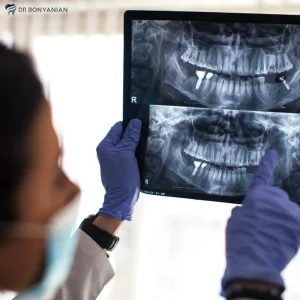
What is digital implant surgery + review of advantages and disadvantages
One of the recent innovations in the field of dental implants and replacement is the digital dental implant method, which uses photography
Read more »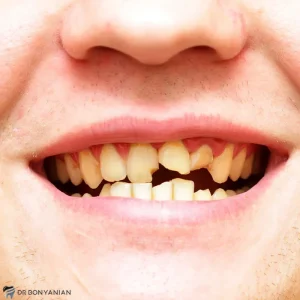
Methods of repairing and treating broken teeth
Teeth, as a vital organ in the body, play a key role in human beauty and health. But sometimes,
Read more »
The best dental clinics in Tehran
This content is a special article written for people living in Tehran. Because we intend to in
Read more »
What is vestibuloplasty? What are the advantages of its surgery
vestibule? Before we discuss fully about vestibuloplasty, it is necessary to understand the meaning of the word vestibule. In definitions
Read more »
The best dentists in Tehran in 1404 Read more »
مقالات دیگر از Dr. Nazi Banianian

What is overdenture? Introducing its types
When a person loses all the teeth in one or two jaws, he can use 3 methods to replace these teeth: - Use of **movable tooth prosthesis** - Use of semi-mobile prosthesis - Use of implant-based prosthe...

What is a wisdom tooth and why is it troublesome?
Wisdom tooth is one of those concepts that although everyone has heard about it, but few people know what its use and importance is in the mouth... Maybe everyone mentions this tooth as the source of...

bleeding gums
Have you ever been worried by seeing traces of blood on your toothbrush or at the bottom of your mouth? Many people ignore this symptom, while this simple matter can be a warning for the health of th...

What is leukoplakia; Causes and treatment of white spots on the gums
What is leukoplakia? Leukoplakia is white or gray spots that appear on the tongue, inside the cheek, or on the gums. This leukoplakia is caused by the mouth's reaction to continuous (chronic) irritat...

What is a Korean dental implant? Introducing the best Korean implant brand
Many countries in the world are engaged in the production of various types of dental implants.... One of these countries that produces popular and high-quality implants is the country of Korea.... Kor...

Dentistry is Dr. Benianian
What is gum pain? The gum is the soft and fleshy part of the mouth that is responsible for protecting and maintaining people's teeth... sometimes this fleshy and soft part becomes painful... usually...

What is canker sore + its causes and treatment
Have you ever had a small, painful sore inside your mouth that makes it difficult for you to eat or even speak? If your answer is yes, you are probably familiar with canker sores...an annoying lesion...

What are the characteristics of a good dentist?
Perhaps it has happened to you that you intend to visit a dentist but you are worried about choosing a good dentist.... Your concern is completely justified.... You are going to leave the beauty or he...

What is a gum lift and for whom is it suitable?
Are you not satisfied with the appearance of your gums? No matter how small and delicate your smile is, does it still show your gums to the person standing in front of you? Don't worry!.. a method cal...

Oral health + ways to care for it
Oral and dental hygiene as one of the vital aspects of public health has always been of special attention to individuals, professionals and society. The health of this part of our body, in addition t...

What is gum grafting and how is its recovery period?
In many people who suffer from gingivitis due to gum disease, gum grafting is necessary... because gradually the roots of the teeth are seriously damaged due to gingivitis.... Gum grafting is performe...

Why should we take choosing the right toothbrush seriously?
Oral hygiene is one of the foundations of the body's general health... While many people are satisfied with only brushing their teeth daily, choosing the type of toothbrush is still not very importan...

SEO site management services
Search engine optimization (SEO) services help you to rank your website higher in the search results of Google and other search engines.

Implementation of branding and digital advertising
Digital branding means creating a strong and distinctive brand in the digital space for a company or a specific product. This process involves using digital methods and strategies to build and strengthen the brand.

Website design for companies and businesses
Website design for companies and businesses can help you have a stronger online presence and attract more customers. Contact us for more information.
