


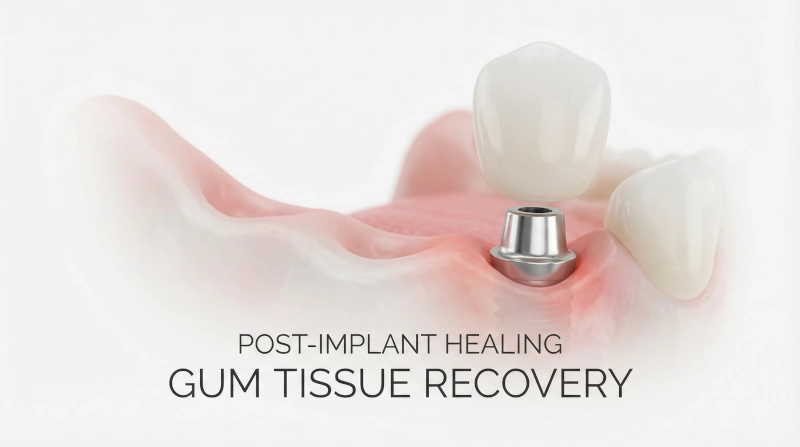

If you have noticed the whitening of the gums around the surgical area after implant placement, your first question is probably whether this is normal or a sign of a serious problem? The short answer to the question is: In many cases, the whitening of the gums after implant surgery is natural and temporary and is related to the process of gum tissue repair. But in some special circumstances, this same color change can be a sign of inflammation, infection or repair disorder that requires specialist investigation.
In general, gum whitening is usually seen in the first days after surgery due to temporary changes in blood supply, stitches or the body's natural reaction to surgery, and it gradually resolves. However, if this discoloration persists or is accompanied by symptoms such as pain, swelling, burning, or discharge, it should not be ignored. In this article, we have examined when it is normal for the gums to whiten after an implant, what factors cause it, what are the warning signs, and what cares help maintain the health of the gums and the implant at each stage.
For consultation with gum and implant surgeon in Karaj contact 09129559071 or fill out the following form:
List of Articles
What is gum whitening after implant surgery and why does it happen?
Gum whitening after implant surgery can be seen as a temporary change in the color of the gum tissue around the surgical area, and in many cases it is part of the body's natural response to surgery. After the implant is implanted, the surrounding bone and gum tissue enter the recovery stage and temporary changes occur in the blood flow and oxygenation of the area. These changes can cause the gums to look brighter or whiter than normal for a while.
One of the common reasons for this condition is temporary reduction of gum surface blood supply due to surgical pressure, sutures or tissue swelling. Also, the use of local anesthetics, manipulation of the gum tissue during surgery and the beginning of the wound healing process can all contribute to the temporary discoloration of the gums. In this situation, the whitening of the gums is usually not accompanied by severe pain or abnormal discharge and gradually resolves with the healing of the tissues.
However, it is important to note that if gum discoloration becomes long-lasting, accompanied by pain, bad breath, or purulent discharge, it could be a sign of an underlying problem that requires professional investigation. For this reason, recognizing the difference between the normal healing reaction and warning signs plays an important role in maintaining the health of the implant and gum tissue; A topic that will be examined in more detail in the next sections of the article.
When is gum whitening after implant normal and when is it dangerous?
Understanding the difference between normal gingival changes and warning signs plays an important role in the success of the implant outcome. Whitening gums can be both harmless and a sign of a problem; which depends on the following conditions:
Things that are usually considered natural:
- Slight whitening of gums in the first days after surgery
- Absence of severe or throbbing pain in the implant area
- Not having purulent discharge or bad breath
- gradual reduction of discoloration over a few days to a maximum of one or two weeks Simultaneous improvement of swelling and sensitivity with time
In these cases, the whitening of the gums is usually part of the natural tissue repair process and is nothing to worry about.
Things that can be a warning:
- Permanence of gum whitening more than two weeks
- Accompaniment of discoloration with persistent or increasing pain
- Observation of discharge, bad taste or bad breath
- Severe gum sensitivity to touch or unusual bleeding
- Worsening the appearance of the gums instead of gradual recovery and gingivitis after the implant
In this situation, the whitening of the gums after the implant may be a sign of an underlying problem, and a specialist examination by a dentist is necessary.
What factors cause whitening of gums after implant?
As we said, the whitening of the gums after implants can have different reasons, some of which are completely temporary and some of which require specialized investigation. Knowing these factors helps to better distinguish the difference between the normal reaction of the gum tissue and problematic symptoms. In the following, the most common effective factors have been investigated.
Gingivitis after implant
Gingival inflammation after implant is one of the common causes of gum discoloration. In this case, the inflammatory reaction of the body can cause a temporary disturbance in the surface blood supply of the gums and the gums will appear brighter or whiter. This condition is usually associated with mild sensitivity or discomfort and will gradually resolve if properly controlled.
Gingival swelling after implant
Gingival swelling after the implant can temporarily reduce the normal blood flow by creating pressure in the surrounding tissues. This decrease in blood supply is sometimes seen in the form of whitening or paleness of the gums. If the swelling decreases within a few days and no other symptoms are added, there is usually nothing to worry about; But its durability needs to be checked.
Gum burning after implant
Gingival inflammation after implant is often related to irritation of the gum tissue due to surgery, sutures or contact of the gum with restorative materials. This burning sensation can be accompanied by slight discoloration of the gums and is usually seen in the early stages of healing. If the burning becomes severe or prolonged, it is necessary to check the cause by a dentist.
During the implantation of the implant, some bone graft material may have been used to increase the stability of the implant. For this reason, in the next few days, you may feel gritty or sandy inside your mouth. Also, the surgical site may be seen in white, which is completely normal and nothing to worry about.
https://osscarolina.com/post-operative-instructions-dental-implants
How is gingival infection in implant-diagnosed?
Diagnosis of gum infection after implant is based on a combination of clinical symptoms, specialized examination and imaging if needed. Unlike the mild and temporary inflammations that may be seen after surgery, the infection usually has a more specific and persistent pattern that does not improve with time.
During the clinical examination, the dentist pays attention to symptoms such as severe or abnormal redness of the gums, persistent swelling, pain when touched, unusual bleeding, and the presence of discharge or foul odor. It is also checked whether the gum around the implant is well connected to the underlying tissue or not. Loosening of gum tissue or progressive sensitivity can be a warning sign.
If infection is suspected, radiographic imaging may be performed to check the condition of the bone around the implant. Decreased bone density or abnormal changes around the implant base can help make a more accurate diagnosis. In some cases, the body's response to primary treatments (such as reducing inflammation after simple procedures) is considered as a diagnostic indicator.
The important point is that early diagnosis plays a key role in controlling infection and maintaining implant success. For this reason, the observation of any unusual or persistent symptoms in the gums around the implant should be taken seriously and a specialist examination should not be postponed.
Gum whitening treatment after implant surgery
Gum whitening treatment after implant surgery depends on its cause. In many cases where this color change is part of the natural healing process, there is no need for special treatment, and with the improvement of blood flow and tissue repair, the color of the gum will return to its normal state. In this situation, following the care recommendations and having enough patience is considered the most effective measure.
But if the whitening of the gums is caused by inflammation, suture pressure, or tissue irritation, the dentist may perform measures such as adjusting the sutures, checking the pressure of the temporary prosthesis, or correcting excess contacts. These simple interventions can help improve the gum condition faster and prevent the problem from progressing.
In cases where gum discoloration is accompanied by warning signs, more targeted treatment is required. These treatments may include specialized cleaning around the implant, prescription of anti-inflammatory drugs or antibiotics, and careful examination of the condition of the gum attachment to the implant. Timely diagnosis at this stage is very important, because it can prevent more serious complications.
In general, the best treatment is to visit the dentist on time and avoid self-medication. The correct diagnosis of the cause of the whitening of the gums makes it possible to carry out the treatment accurately and according to the conditions of each patient and to maintain the health of the implant in the long term.
necessary care to prevent gum problems after implant
Implant success is not only dependent on surgery, but correct care at every stage plays a decisive role in gum health and implant durability. Observing this checklist and visiting the dentist regularly will minimize the risk of inflammation, infection or gum recession.
Care immediately after titanium base implant surgery (fixture)
- Avoid washing your mouth vigorously for the first 24 hours
- Avoid sucking, spitting repeatedly or using a straw
- Using a cold compress on the face (10 minutes use / 10 minutes rest) to reduce swelling
- Using prescribed medications exactly as directed
- Avoid hard, hot and spicy foods
- Not using cigarettes and alcohol (at least 7 to 10 days)
- Do not brush directly on the surgical area until the doctor informs
Care in the days after the implantation of the implant base (bone healing period)
- gently rinsing the mouth with prescribed mouthwash or diluted salt water
- Maintaining oral hygiene without pressure on the surgical site
- Regular reference to check implant healing
- Avoid applying pressure or chewing food with the implant area
- Paying attention to symptoms such as constant pain, discharge or abnormal color change of the gums
Care after gum surgery (in case of gum surgery or implant opening)
- Avoid touching or playing with the gum area
- Using mouthwash as prescribed by the doctor
- Consumption of soft and cool foods in the first few days
- Avoid brushing directly on the stitches
- Pay attention to intense whitening, throbbing pain or unusual bleeding
Care after installing the abutment (connecting part of the cover)
- Careful hygiene around the abutment
- Using a soft toothbrush and interdental for implants
- Preventing direct pressure on the area
- Attention to any inflammation, swelling or burning of the gums around the abutment
- See a doctor if you feel loose or feel constant discomfort
Care after installing the final implant cover
- start brushing your teeth regularly with the correct method
- Using dental floss for implants or waterjet
- Avoid chewing very hard objects (ice, hard pot, very hard nuts)
- Perform periodical examinations once every 6 months
- Attention to the health of the gums around the implant in the long term
Therefore, at every stage of implant treatment, the occurrence of some symptoms can indicate the existence of a problem and should not be ignored. Severe or increasing pain that does not decrease with time, purulent discharge or bad breath, continuous or expanding swelling in the gum area, abnormal and permanent whitening of the gums as well as uncontrollable bleeding are among the symptoms that require an immediate visit to the dentist.
Observation of any of these symptoms can indicate severe inflammation, infection or disruption in the healing process, and early examination will play an important role in preventing more serious complications and also maintaining the health of the implant.
In the Gum and Implant Surgery Center of Dr. Masfer and Dr. Shanae, the condition of the gums after the implant is examined in a specialized and detailed manner so that, if necessary, treatment measures can be performed on time and more serious complications can be prevented.
Contact Info
Contact number: 09129559071
Address: Karaj, Beheshti St., between Shahada Square and Taleghani Crossroads, 7th Floor, Unit 23, Qaem Doctors Tower



No comment has been registered yet, you are the first to post a comment.
Submit a comment