
Why does the numbness of the tooth not go away?

Why does tooth numbness not go away?
Home - oral surgery articles - Why does tooth numbness not go away?- Publication date: 05/11/1404
- Editing date: 05/13/1404
- 0 views
- Study time: 8 minutes
- Confirmed by: Dr. Nazi Banianian

❌ Why doesn't tooth numbness go away?
- Damage to the nerves around the tooth
- Using long-acting or higher dose anesthetics
- Inflammation or infection in the treatment area
- Neurological disorders or Metabolic
- Error in the injection site of anesthesia
- Unusual reaction of the body to anesthetic drug
What can we do to make the numbness of our teeth go away sooner?
- Drinking warm liquids
- Gentle massage of the cheek and around the jaw along with slow movements of the jaw and tongue
- Using a warm compress on the face
- Adequate rest and abstinence From pressure to the area
- Avoid eating food with the numb side
Approved by Dr. Benianian dental specialists
The content of this article is only to increase your awareness. Before taking any action, seek advice from dentistry Dr. Benyanian.
Long-term tooth numbness is one of the most common side effects that occur after dental treatments such as root canal treatment, filling tooth, dental surgery or tooth extraction occurs.
This complication should naturally resolve after a few hours. But in some cases it may take days or even weeks to heal! This issue worries patients and makes them search the Internet to find out why the numbness of their teeth does not go away. Therefore, in this article from Dr. Benianian's dental website, we intend to investigate the reasons for the persistence of tooth numbness, the factors affecting this numbness, treatment methods and related preventive tips. So, to get more information in this field, stay with us until the end of this article.
What is tooth numbness?
Tooth numbness is a temporary loss of sensation in the tooth or jaw area, which is usually caused by using local anesthetic drugs. These drugs temporarily prevent the nerves from transmitting pain and sensation messages to the brain.
A study published in 2020 in the Journal of Endodontics shows that about 1 to 3% of patients may experience long-term numbness after the injection of anesthetic, the main cause of which is temporary nerve damage or inflammation. (Source: Malamed SF. Management of local anesthetic complications. J Endod. 2020;46(8):1157-1163.)

What is meant by long-term anesthesia?
Long-term anesthesia is a condition in which after a dental treatment, numbness or tingling sensation in or around the tooth is more than It continues for several hours or a day and does not resolve naturally.
This situation is a sign that the nerves or tissues around the tooth are damaged or inflamed and need medical follow-up.
Why does tooth numbness not disappear?
In the following, we point out the most important reasons for tooth numbness to prolong and not disappear.
1. Nerve damage
One of the most common reasons for remaining numb after dental treatments is the damage to the nerves around the treatment area.
The jaw nerves, especially the inferior alveolar nerve and the lingual nerve, are very sensitive and if during wisdom tooth extraction, surgery Jaw, implant surgery or even nerve removal, put a lot of pressure on them or directly damage them, their normal function may be disturbed.
In this situation, the person may experience tooth numbness, tingling or numbness for several days to even several weeks.
Sometimes this damage is temporary and with the passage of time and the natural restoration of the body, the feeling of the area returns. But in rare cases, the damage can be permanent and require more specialized treatments.
2. Type and dose of anesthetic
Anesthetics are not the same. Some of them, such as bupivacaine or articaine, have a longer effect and are used for complex and time-consuming surgeries.
Sometimes the dentist has to use a higher dose of anesthetic to ensure that the treatment is completely painless, and this can cause the effect of the drug to remain longer than usual and the patient may experience dental numbness for several hours. break down the drug and the numbness lasts longer.


3. Inflammation and infection
If the treated area is inflamed or infected, the process of blood supply and tissue repair may be disturbed. As a result, the nerves that were involved in the treatment need more time to return to normal.
For example, severe tooth decay, infections around the root of the tooth or dental abscess can cause pressure on the surrounding nerves and prolong numbness.
In this Conditions, treatment of infection with antibiotics or other methods, helps to improve the sensation and normal function of the tissues.
4. Underlying medical conditions
Some underlying diseases can negatively affect the nervous system and slow down the process of restoration and return of sensation.
For example, diabetes is one of the diseases that over time causes damage to the nerves (diabetic neuropathy). People with neurological diseases, autoimmune diseases, or metabolic disorders may also experience normal sensation in the numbed area later than healthy people.
For this reason, it is very important that the patient discuss his medical history with his dentist before performing dental treatments.

5. Error in anesthesia injection
If the anesthetic is not injected correctly and in the right area, the possibility of damage to the main nerves or sensitive tissues increases. Sometimes the tip of the needle is placed near an important nerve or the drug is injected directly around the nerve, which can cause inflammation, pressure or even minor damage to the nerve.
This is usually rare and occurs mostly when the injection is done in deep areas or close to the jaw nerve. Although in most cases these injuries are temporary, they can take several weeks to completely resolve.
What is the normal duration of tooth numbness?
Usually, tooth numbness wears off between 1 and 4 hours after the anesthetic is injected. If this duration reaches more than 24 hours, you should see a dentist.
Table comparing the duration of anesthesia according to the type of anesthetic drug
Type of anesthetic drug Duration of effect (hours) Description Lidocaine (Lidocaine) 1.5 to 2.5 The most widely used and safest drug Articaine (Articaine) 1 to 3 Better penetration into hard tissues Bupivacaine (Bupivacaine) 4 to 8 effects Long, for long surgeries Mepivacaine 1.5 to 3 Fast acting but shorterWarning signs of prolonged tooth numbness
- Long tooth numbness or tingling for more than 24 hours after treatment
- Weakness or paralysis of facial muscles
- Severe pain in other areas with numbness of the treated area
- Persistent burning or tingling sensation

Dr. Bonyanian's recommendations about tooth numbness
Prolonged tooth numbness after dental treatments is usually not a concern. But if it continues for more than a day, you must see a doctor. In many cases, numbness is caused by temporary nerve damage that will heal with proper care and time. Of course, in rare cases, more specialized treatments may be needed.
Methods to remove tooth numbness
Although tooth numbness is temporary, in cases where this condition lasts longer than expected, it is necessary to help speed up the healing process with appropriate treatment methods. Methods like:
1. Patience and rest
In most cases, tooth numbness is caused by the natural effect of the anesthetic drug and it disappears completely after a few hours or at most a few days.
The body needs time to break down and eliminate the injected drug and also the nerves that are inflamed or pressured return to normal. So, during this period, the most important thing the patient can do is to rest enough, avoid irritating the affected area and follow the dentist's care instructions.
Avoid chewing with the treated side, adequate sleep and stress management can also help speed up this process.
2. Anti-inflammatory drugs
If the numbness is caused by tissue or nerve inflammation, taking toothache pills and non-steroidal anti-inflammatory drugs (NSAIDs) such as ibuprofen or naproxen can help reduce swelling and pressure on the nerves.
These drugs, in addition to reducing pain, improve blood circulation in the treatment area. They are combined and help to restore the function of the nerve. Of course, the use of these drugs should be done according to the doctor's or dentist's prescription. Especially in those who have a history of gastrointestinal or kidney diseases.
3. Physiotherapy and massage
If the cause is numbness, pressure or slight damage to the nerves, oral, jaw and facial physiotherapy can be very useful for the person. We mean performing simple exercises such as opening and closing the jaw, gentle movements of the tongue or gentle massage around the numb area. The same things that help to improve blood circulation and stimulate nerve regeneration.
In situations where numbness lasts for a very, very long time (more than a month!), you should go to specialized physiotherapists who can speed up your recovery process by using devices such as electrical stimulation (TENS) or ultrasound.
4. Use of supplements
Nerves need special nutrients for repair and regeneration. One of the most important vitamin groups in this field are group B vitamins. Especially B1 (thiamine), B6 and B12 (cobalamin), which play a key role in the health of the nervous system.
Vitamin B12 is particularly effective in the regeneration of myelin (the covering around nerves) and is often prescribed in the form of tablets, ampoules or sublingual drops.

5. See a neurologist
The last thing you can do to get rid of the numbness in your teeth is to see a neurologist. Of course, in a situation where numbness lasts for several weeks and extends to other areas such as facial muscles, jaw and neck.
In this situation, it is necessary to see a neurologist. A neurologist can check if there is serious nerve damage by conducting specialized tests such as neuromuscular (EMG) or brain imaging (MRI). But in most cases, these mild solutions are effective and remove the numbness of your tooth. Here is a list of useful home methods to reduce tooth numbness and help heal faster:
✅ Home remedies to remove tooth numbness:
- Rest and avoid pressure on the numb area of the tooth
- Using a warm compress (not hot)
- Gently massage the numb area with circular movements
- Drinking water and warm liquids (not hot) such as chamomile tea or Ginger
- Making gentle movements of the jaw and face such as slowly opening and closing the jaw and moving the lips and tongue
- Adhering to a healthy diet rich in vitamin B such as eggs, meat, lentils, brains and dairy products
- Using vitamin B12 supplements (with the doctor's advice)
- Avoid alcohol and smoking
- Deep breathing and stress reduction

Important tips to prevent long-term tooth numbness
- Choosing a specialist and experienced dentist
- Completely informing the doctor about diseases and medications Usage
- Avoid excessive pressure in the treatment area
- Observation of oral and dental hygiene to prevent infection
Summary of tooth numbness
Tooth numbness after dental treatments is a natural phenomenon that generally resolves within a few hours. But if the numbness lasts longer than usual, it can have various reasons, including nerve damage, inflammation, or infection.
The fact that with dental advances and the emergence of new technologies, dental anesthesia treatments have become safer day by day; But it is still very important to pay attention to the details of the treatment and aftercare.
However, if this happens, the patient should be patient, follow the care tips and see a specialist if needed.
How helpful was this post?
Click a star to rate it!
Average score 3.6 / 5. Number of votes: 10
There are no votes yet! Be the first to rate this post.
Frequently asked questions about why tooth numbness does not go away?
Is dental anesthesia dangerous?
No, anesthesia is safe and temporarily cuts off sensation in the area in question. Only in rare cases can prolonged numbness be a sign of nerve damage.
When should I see a dentist?
If the numbness lasts more than 24 hours or is accompanied by pain and weakness, it is better to see a dentist.
Does prolonged tooth numbness cause facial paralysis?
Usually no. Except in very rare and severe cases where nerve damage can cause muscle weakness.
Can prolonged tooth numbness become permanent?
In very, very rare cases, tooth numbness may become permanent. This happens when the jaw nerves have suffered direct damage or severe pressure during the treatment. However, most cases of mild or moderate nerve damage are temporary and heal within a few weeks to months.
 dr.bonyanian
Views
Share comments
dr.bonyanian
Views
Share commentsPost a new comment Cancel reply
Other articles Related articles
What is a gum lift and who is it suitable for? Are you not satisfied with the appearance of your gums? No matter how small and delicate your smile is, still the gums
Read more »
 What is gum flap surgery?
Gum diseases are one of the most common oral problems. When these diseases are diagnosed in the early stages
Read more »

The period of time to close the cavity of an extracted tooth
Tooth extraction, especially the extraction of teeth such as wisdom teeth, is one of the most common dental procedures. After tooth extraction,
Read more »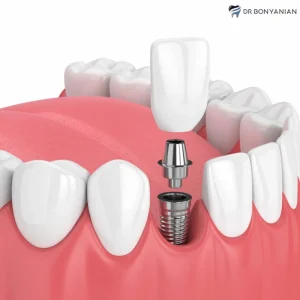
What is a fixture? Introduction and how to use it in implant
If you decide to replace your missing tooth using the implant method, it is not bad to
Read more »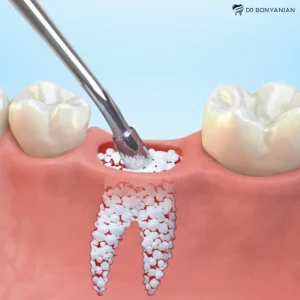 What you should know about dental bone grafting
 One of the possible and necessary surgeries before dental implants is dental bone grafting surgery. But dental bone graft
Read more »مقالات دیگر از Dr. Nazi Banianian

What is overdenture? Introducing its types
When a person loses all the teeth in one or two jaws, he can use 3 methods to replace these teeth: - Use of **movable tooth prosthesis** - Use of semi-mobile prosthesis - Use of implant-based prosthe...

What is a wisdom tooth and why is it troublesome?
Wisdom tooth is one of those concepts that although everyone has heard about it, but few people know what its use and importance is in the mouth... Maybe everyone mentions this tooth as the source of...

bleeding gums
Have you ever been worried by seeing traces of blood on your toothbrush or at the bottom of your mouth? Many people ignore this symptom, while this simple matter can be a warning for the health of th...

What is leukoplakia; Causes and treatment of white spots on the gums
What is leukoplakia? Leukoplakia is white or gray spots that appear on the tongue, inside the cheek, or on the gums. This leukoplakia is caused by the mouth's reaction to continuous (chronic) irritat...

What is a Korean dental implant? Introducing the best Korean implant brand
Many countries in the world are engaged in the production of various types of dental implants.... One of these countries that produces popular and high-quality implants is the country of Korea.... Kor...

Dentistry is Dr. Benianian
What is gum pain? The gum is the soft and fleshy part of the mouth that is responsible for protecting and maintaining people's teeth... sometimes this fleshy and soft part becomes painful... usually...

What is canker sore + its causes and treatment
Have you ever had a small, painful sore inside your mouth that makes it difficult for you to eat or even speak? If your answer is yes, you are probably familiar with canker sores...an annoying lesion...

What are the characteristics of a good dentist?
Perhaps it has happened to you that you intend to visit a dentist but you are worried about choosing a good dentist.... Your concern is completely justified.... You are going to leave the beauty or he...

What is a gum lift and for whom is it suitable?
Are you not satisfied with the appearance of your gums? No matter how small and delicate your smile is, does it still show your gums to the person standing in front of you? Don't worry!.. a method cal...

Oral health + ways to care for it
Oral and dental hygiene as one of the vital aspects of public health has always been of special attention to individuals, professionals and society. The health of this part of our body, in addition t...

What is gum grafting and how is its recovery period?
In many people who suffer from gingivitis due to gum disease, gum grafting is necessary... because gradually the roots of the teeth are seriously damaged due to gingivitis.... Gum grafting is performe...

Why should we take choosing the right toothbrush seriously?
Oral hygiene is one of the foundations of the body's general health... While many people are satisfied with only brushing their teeth daily, choosing the type of toothbrush is still not very importan...

SEO site management services
Search engine optimization (SEO) services help you to rank your website higher in the search results of Google and other search engines.

Implementation of branding and digital advertising
Digital branding means creating a strong and distinctive brand in the digital space for a company or a specific product. This process involves using digital methods and strategies to build and strengthen the brand.

Website design for companies and businesses
Website design for companies and businesses can help you have a stronger online presence and attract more customers. Contact us for more information.
