
What is re-nervation and when does a tooth need re-nervation?

When does a tooth need re-nervation?
Home - Tooth Root Treatment Articles - When does a tooth need re-nervation?- Publication date: 06/26/1404
- Editing date: 07/06/1404
- 0 views
- Study time: 7 minutes
- Confirmed by: Dr. Nazi Banianian

What does tooth re-nervation mean? ✅ Re-nervation means opening a previously denervated tooth, emptying the previous filling material, re-disinfecting the canals and re-filling it to remove the remaining infection or problem.
Signs of needing to re-nerve the tooth:
- Severe or persistent pain when chewing or touching
- Abnormal sensitivity to cold and heat
- Swelling or abscess of the gums around Teeth
- Change in tooth color (darkening or graying)
- Pusulent secretions coming out of the gums
- Feeling loose or loose teeth
Approved by Dr. Benianian dental specialists
The content of this article is only to increase your awareness. Before taking any action, seek advice from Dentistry Dr. Benyanian.
Dental denervation is one of the basic treatments in dentistry, which is performed with the aim of saving damaged teeth from decay or infection. Normally, after root canal treatment, the patient's tooth remains problem-free for years. But in some situations, the symptoms may reappear and the tooth becomes infected or painful again. In such a situation, the dentist recommends performing re-nervation (root retreatment).
In this article from Dr. Benianian's website, we will fully review the reasons, symptoms, treatment steps, success rate, care and prevention of the need for re-nervation to help you determine the right time to visit the dentist.
What is tooth re-nervation?
Re-nervation or Root Canal Retreatment means re-opening the treated tooth, removing the previous filling material, re-cleaning the canals and re-filling them. This treatment is performed when the previous treatment was not successful for any reason or the infection has re-emerged.

Reasons for needing re-nervation of the tooth
Sometimes, even though the root treatment was done correctly in the first stage, various factors cause the tooth to have problems again. These factors can include the remaining infection to the occurrence of new decay or tooth fracture.
So knowing the main reasons will help you to prevent these problems and, if needed, to visit the dentist faster.
The main reasons for needing re-nervation of the tooth are the following:
Resistance of infection after the first treatment
One of the main reasons for the need for re-nervation is remaining The infection is in the root or canals of the tooth. The roots of the teeth (especially in the molars or molars) have a very complex structure and may have lateral channels or severe curvature. In such a situation, even if the dentist performs the treatment completely, there is a possibility that the microbes will remain in the remote parts. After some time, these bacteria are activated and cause denervated toothache, swelling and abscess formation.
This is why in some patients, despite the initial treatment, the infection returns again and re-denervation becomes necessary.
Improper filling or repair
After denervation, the tooth must be filled with filling materials. suitable or dental crowns restored to prevent re-infiltration of bacteria. If dental restoration is not done properly, even the smallest leakage around the filling or veneer can be the way for microbes to enter the root canal.
In such a situation, all the efforts of the initial treatment will be ineffective and the infection will occur again. Therefore, the quality of the final restoration of the tooth is very important.
For this reason, dentists often recommend that the teeth that undergo denervation be protected with a suitable coating to increase the lifespan of the denervated tooth.


Fractures or cracks in the tooth
Though they are not visible to the naked eye, they can be one of the main reasons for the return of infection.
When the surface of the tooth is cracked, microbes can easily enter. Through this route, they enter the root and cause inflammation and re-infection.
These cracks may be caused by various reasons, including:
- Excessive pressure when chewing
- Using the teeth to break hard objects
- Squeezing the teeth together while sleeping (bruxism)
In such a situation, even if the root treatment is completely done, a fracture or crack can cause the treatment result to be lost and create the need for re-nervation. After initial treatment, if the person does not maintain good oral hygiene or has a diet high in sugar and harmful substances, there is a possibility of decay around the filling or crown. In this case, a new infection is formed which can only be controlled by re-treatment.
Therefore, care after root canal treatment plays a vital role in the longevity of the treatment, and regular visits to the dentist for check-ups can prevent many of these problems.
Symptoms and signs of teeth that need re-nervation has
- severe or constant pain when chewing or touching
- abnormal sensitivity to cold and heat
- swelling or abscess of the gums around the tooth
- change in tooth color (gray or blackening of the tooth after nerve extraction)
- purulent discharge from Gums
- Feeling loose or loose teeth

Methods for diagnosing the need for nerve rooting Again
Clinical examination
The first step in diagnosing the need for re-nerving is a detailed dental examination by a dentist. At this stage, the doctor carefully examines the appearance of the tooth and the surrounding gums.
Symptoms such as swelling of the gums, presence of tooth abscess, tooth discoloration, pain when touching or chewing, and even tooth sensitivity to temperature They can be clues to the problem.
Sometimes the dentist gently taps the tooth with a special tool to check its reaction. If severe or abnormal pain occurs, retreatment is likely to be necessary.
This clinical examination plays a very important role, because even without advanced equipment, it can reveal the overall health of the tooth and guide the decision for further actions.
Read more: How long after nerve extraction should fill the tooth? What should we do?
Radiography imaging
Radiography imaging is one of the most accurate and essential diagnostic tools in dentistry. This method allows the observation of the hidden parts of the teeth, roots and jaw bone. That is, the parts that cannot be examined with the naked eye.
Radiography can show the presence of lesions around the root, the remaining infection in the canals, or even tiny fractures of the tooth. It is also determined whether the previous treatment was done completely or if part of the canals remained blocked and unfilled. Today, with the use of digital technologies, the accuracy of radiographic images has increased greatly and even minor changes can be detected. For this reason, dentists almost always use radiographs to confirm their diagnosis. Again
1. Opening the previous restoration
In the first step of re-nervation, the dentist must access the root canals. For this, the previous filling or veneer is removed to make way for the previous treatment. This work is done carefully so as not to damage the remaining structure of the tooth.
2. Removal of previous root filling materials
After accessing the inside of the tooth, the filling materials that were used in the initial treatment are removed with specialized tools. This step is important because the presence of any remaining material can prevent the channels from being completely cleaned.
3. Re-cleaning of the canals
After emptying the previous material, the root canals are completely washed. In this step, disinfectant solutions are used to eliminate any possible bacteria or infection. The goal is to have the channels completely clean and ready to refill.
4. Filling and resealing
Once the canals are completely disinfected, new root filling materials are used. These materials seal the interior so that no germs can re-enter. The quality of this stage plays a big role in the success of the treatment.
5. Final restoration
At the end, the tooth is restored with a filling or, in most cases, with a veneer. In addition to restoring the beauty of the tooth, this work protects it from daily pressures and increases the lifespan of the treatment.

Renervation of the tooth at Dr. Basics
If you or a loved one is experiencing symptoms such as persistent pain, swollen gums, tooth discoloration, or abnormal sensitivity, you may need a re-nerve. In such a situation, visiting a specialized center can make a big difference in the outcome of the treatment.
In Dr. Benianian's dentistry, the re-nerving process is performed using modern equipment and advanced imaging technologies to identify the smallest infection or hidden problem in the root of the tooth.
The high experience of the treatment team and the up-to-date knowledge of the dentists of this center make every step of the work done with high precision and the least amount of pain and discomfort for the patient.
Nazi Banianian:
One of the important advantages of our clinic is special attention to the comfort and relaxation of patients. From the moment of arrival to the end of the treatment, all steps are planned in such a way that your stress is reduced and you have a safe and pleasant experience. In addition, the use of high-quality restorative materials and resistant coatings will increase the life of your treatment and ease your worries about dental health for years.
Therefore, if you are looking for accurate, reliable and lasting treatment, we recommend that you visit Dr. Banyanian's dentist today for a consultation and an appointment.
Request a dental appointmentSuccess rate and limitations of re-nervation
The success rate of tooth re-nervation is between 70 and 85%, and factors such as the severity of the infection, the quality of previous treatment, the condition of the root and the skill of the dentist play a decisive role in the result.
However, in some special cases when re-treatment is not successful, endodontic surgery (apicectomy) or even pulling tooth should be proposed as an alternative option.

How much does tooth reinnervation cost? You can visit the dedicated page re-nervation cost; There, a more complete description of the tariffs and different treatment conditions is provided.Care after re-nervation
DescriptionsAvoid chewing hard foodsUntil the final restoration of the tooth, avoid eating hard or sticky foods so as not to damage the weakened tooth structure. Regular visits for check-upsPeriodic visits to the dentist allow to check the healing process and prevent possible problems.Use of prescription drugsAntibiotics and pain relievers should be taken exactly as prescribed by the doctor to control the infection and reduce pain. From the proper coating after denervation
the final conclusion of the issue of re-nervation of the tooth
re-nervation is a life-saving treatment for a tooth that is still in trouble after the initial treatment. Knowing the warning signs, visiting the dentist in time and choosing a reputable treatment center can prevent tooth extraction.
If you also see symptoms such as persistent pain, swelling or tooth discoloration, don't waste time and go to the dentist as soon as possible.
How helpful was this post?
Click on a star to rate it. give it! Number of votes: 1
There are no votes yet! Be the first to rate this post.
Frequently asked questions about when a tooth needs re-nervation?
Do all treated teeth need re-nervation?
No. Only teeth that are re-infected or have problems need this treatment.
Does re-nervation hurt?
Using local anesthesia, the patient does not feel pain during the treatment. Only a little sensitivity may remain after the treatment.
Is re-nervation 100% successful?
No. But if you go to an experienced specialist, the probability of success will be very high.
Is it possible to extract the tooth instead of re-nerving?
Yes, but always keeping the natural tooth is a better option than extracting and replacing it with an implant or prosthesis.
 dr.bonyanian
Views
Share comments
dr.bonyanian
Views
Share commentsPost a new comment Cancel reply
Other articles Related articles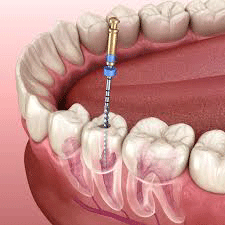
List of the best endodontic treatment specialists (nervectomy)
Choosing a good endodontic treatment specialist, who is both at a high level in terms of skills and expertise, and from
Read more »
How long should we fill the tooth after nerve extraction? The other half is time and manner Read more » >> Complications of tooth filling without denervation
Filling is a more colloquial term for tooth restoration. This method when the dentist intends to make cavities or cavities
Read more » Extraction of children's milk teethYou, as a parent of a child, surely remember the memorable moments of your child teething
Read more » > The best dental clinics in TehranThis content is a special article written for people living in Tehran. Because we intend to in
Read more »مقالات دیگر از Dr. Nazi Banianian

What is overdenture? Introducing its types
When a person loses all the teeth in one or two jaws, he can use 3 methods to replace these teeth: - Use of **movable tooth prosthesis** - Use of semi-mobile prosthesis - Use of implant-based prosthe...

What is a wisdom tooth and why is it troublesome?
Wisdom tooth is one of those concepts that although everyone has heard about it, but few people know what its use and importance is in the mouth... Maybe everyone mentions this tooth as the source of...

bleeding gums
Have you ever been worried by seeing traces of blood on your toothbrush or at the bottom of your mouth? Many people ignore this symptom, while this simple matter can be a warning for the health of th...

What is leukoplakia; Causes and treatment of white spots on the gums
What is leukoplakia? Leukoplakia is white or gray spots that appear on the tongue, inside the cheek, or on the gums. This leukoplakia is caused by the mouth's reaction to continuous (chronic) irritat...

What is a Korean dental implant? Introducing the best Korean implant brand
Many countries in the world are engaged in the production of various types of dental implants.... One of these countries that produces popular and high-quality implants is the country of Korea.... Kor...

Dentistry is Dr. Benianian
What is gum pain? The gum is the soft and fleshy part of the mouth that is responsible for protecting and maintaining people's teeth... sometimes this fleshy and soft part becomes painful... usually...

What is canker sore + its causes and treatment
Have you ever had a small, painful sore inside your mouth that makes it difficult for you to eat or even speak? If your answer is yes, you are probably familiar with canker sores...an annoying lesion...

What are the characteristics of a good dentist?
Perhaps it has happened to you that you intend to visit a dentist but you are worried about choosing a good dentist.... Your concern is completely justified.... You are going to leave the beauty or he...

What is a gum lift and for whom is it suitable?
Are you not satisfied with the appearance of your gums? No matter how small and delicate your smile is, does it still show your gums to the person standing in front of you? Don't worry!.. a method cal...

Oral health + ways to care for it
Oral and dental hygiene as one of the vital aspects of public health has always been of special attention to individuals, professionals and society. The health of this part of our body, in addition t...

What is gum grafting and how is its recovery period?
In many people who suffer from gingivitis due to gum disease, gum grafting is necessary... because gradually the roots of the teeth are seriously damaged due to gingivitis.... Gum grafting is performe...

Why should we take choosing the right toothbrush seriously?
Oral hygiene is one of the foundations of the body's general health... While many people are satisfied with only brushing their teeth daily, choosing the type of toothbrush is still not very importan...

SEO site management services
Search engine optimization (SEO) services help you to rank your website higher in the search results of Google and other search engines.

Implementation of branding and digital advertising
Digital branding means creating a strong and distinctive brand in the digital space for a company or a specific product. This process involves using digital methods and strategies to build and strengthen the brand.

Website design for companies and businesses
Website design for companies and businesses can help you have a stronger online presence and attract more customers. Contact us for more information.
