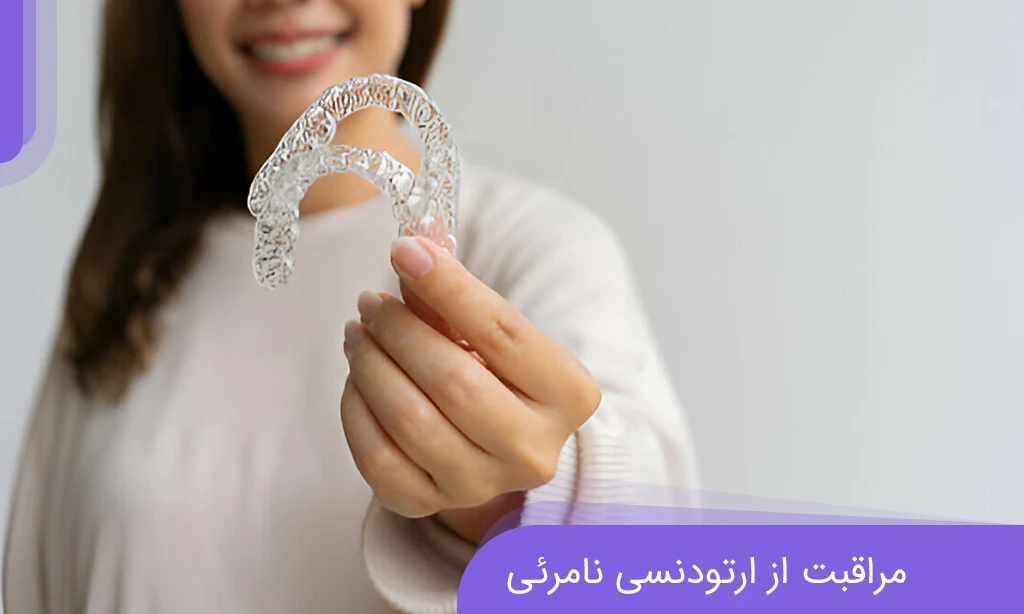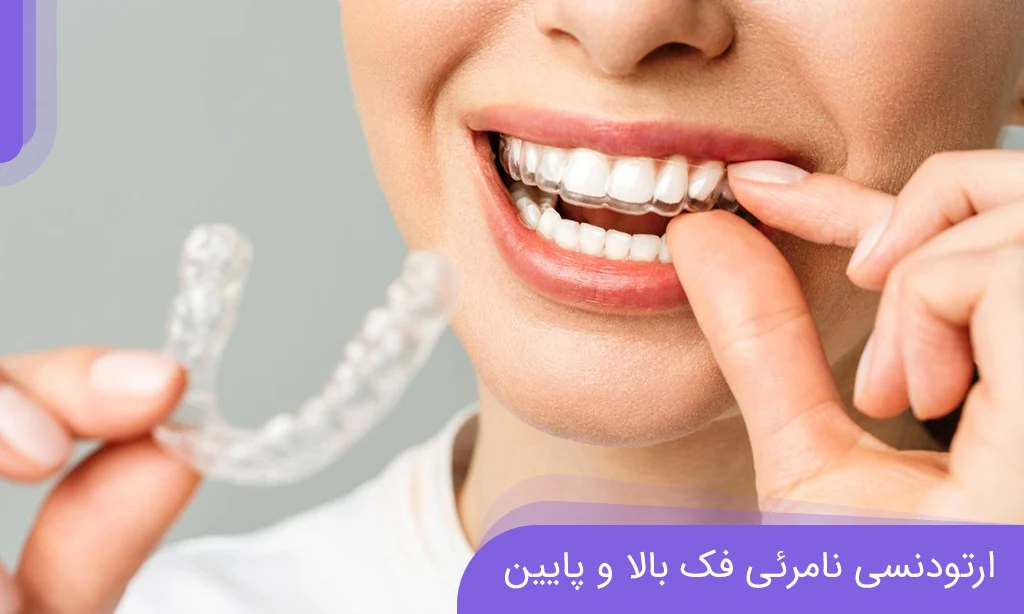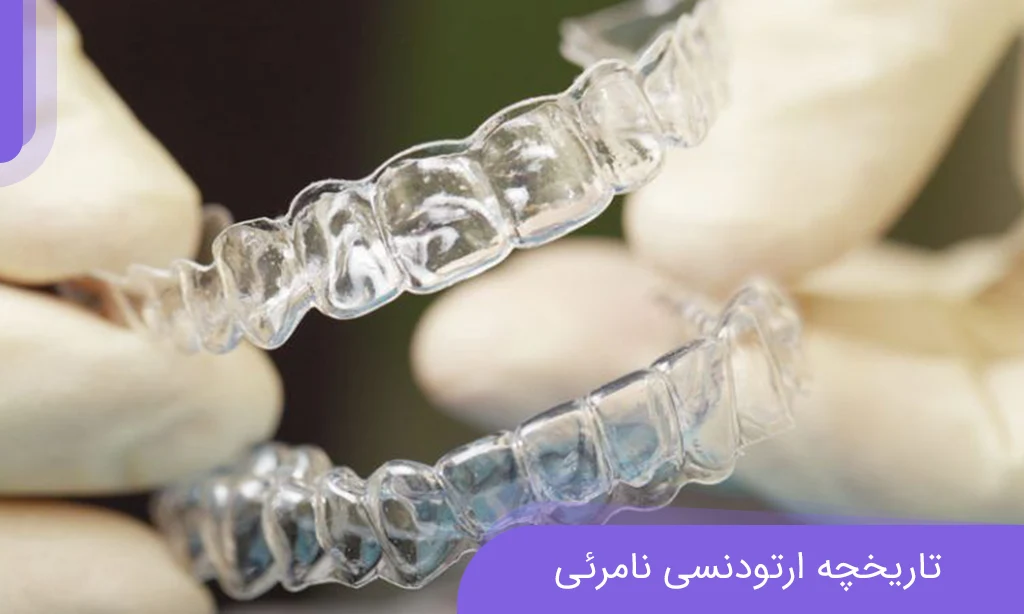

Invisible orthodontics due to the lack of wire and metal brackets, has been common for years It has become one of the most popular methods of straightening teeth and correcting smile design. But this modern technology did not appear overnight, and behind today's transparent license plates, there are years of ideation, trial and error, and significant digital advances.
In this article, we examine the history of invisible orthodontics from the first sparks of thought to the birth of Invisalign and the role of new technologies in its development to see how this treatment has reached its current position and what direction it will take in the future. If you want to learn more about the roots and developments of invisible orthodontic treatment, stay with us until the end of the article.
When the appearance of braces became a concern
Although traditional orthodontics corrected a wide range of jaw deformities and tooth irregularities, there was still a big problem for patients, especially adults, and that was the metallic and eye-catching appearance of braces.
Many people did not feel comfortable with metal braces in the work environment or social interactions, and this caused them to postpone or completely abandon orthodontic treatment.
Appearance limitations, difficulty in maintaining oral hygiene, difficulty in speaking and chewing food, injury and irritation of the gums and cheeks highlighted the need for a less visible and more flexible method. These concerns were the starting point of the idea of invisible orthodontics. An approach whose goal is to maintain the effectiveness of orthodontic treatment without visible wires and brackets and to be more compatible with the patients' lifestyle.

A look at the first transparent orthodontic appliances
Quoted from eonaligner which is one of the largest manufacturers of transparent aligners in the world:
Before the introduction of the modern Invisalign system, orthodontists used transparent movable instruments to correct the position of the teeth. Instruments such as Kesling Positioner, Essix Retainer and other transparent plaques made only limited changes in the position of the teeth.
These devices were used to correct minor irregularities and maintain the results of orthodontic treatment. However, it was still not possible to accurately control the dental movements and plan the step-by-step treatment. Therefore, these tools could not replace complete orthodontic treatment.
Nevertheless, the experience of working with these transparent plaques provided the intellectual and technological path necessary for the development of the next generation of invisible orthodontics, i.e. digital and phased systems such as Invisalign, and created a foundation for a major transformation in the world of orthodontics.
The first idea of invisible orthodontics started here
The idea of invisible orthodontics was first formed in the mind of a Stanford University computer science student named "Zia Chishti". Zia had recently completed orthodontic treatment with fixed metal braces and had to use a clear plastic plate (retainer) to maintain the results of the treatment. But he forgot to use the license plate for a while.
When he went back to the retainer, he noticed that the plaque was putting pressure on his teeth. That is, the teeth that were returning to their pre-treatment condition were corrected again with the help of transparent plaque.
This simple experience sparked a thought in his mind, if one plaque causes slight movement of the teeth, then using several plaques in a row with small changes can completely straighten the teeth.

This brilliant idea is the starting point of the history of invisible orthodontics and the development of today's Invisalign system.
How was Aynwyzylayn born?
After the initial design of invisible orthodontics was formed by Zia Chishti, he and his colleagues founded Align Technology in 1997 to make this idea a reality. The main goal was to make step-by-step transparent aligners that can perform accurate dental movements without wires and brackets.
They were able to plan the stages of teeth movement by using digital design and preparing a 3D model of the mouth. Then produce a set of transparent plaques according to the treatment stages, custom-made for each patient.
In 1998, the company received FDA approval for transparent aligners. They first marketed their product in 1999 as an innovative alternative to metal braces.

The birth of this system was a turning point in the history of invisible orthodontics. Because for the first time it was possible to correct teeth with removable and invisible plaques. A method that quickly became popular among adult and adolescent patients.
Digital technology in the evolution of invisible orthodontics; From traditional molding to 3D scanningThe advent of digital technology has created a major revolution in the history of invisible orthodontics. In traditional methods, internal paste-like materials (such as alginate or elastomer) were used to mold the teeth, and the plaque design process was done manually, which had limited accuracy and control.
With the advancement of technology, 3D intraoral scanners replaced the traditional molding, and it was possible to accurately record the shape and position of the teeth.
These data are processed in specialized software and the path of the teeth is programmed step by step. Then, with the help of 3D printing and advanced thermoplastic materials, a set of customized aligners is made for each patient. Each plaque exerts a controlled pressure on the teeth during use.

This technology has made invisible orthodontic treatment more accurate, faster and more comfortable, and patients have a less troublesome and predictable experience of their treatment.
Evolution of transparent plaques in orthodontics
In the table below, you can see the timing of the events that led to the evolution of invisible orthodontics over time. As you can see in the table below, the first transparent orthodontic tools were used since 1945, but the first examples of transparent aligners that we know today were made in 1997 at Align Technology.
| Important events in the history of invisible orthodontics | Year |
| The first clear orthodontic tools | 1945 |
| Essix orthodontic system before the birth of clear aligners | 1993 |
| Foundation of Align Technology by Zia Cheshti | 1997 |
| Getting FDA approval for clear aligners | 1998 |
| Supplying the first clear aligners to the market | 1999 |
| Development of SmartTrack and iTero | 2020+ |
Global popularity of invisible orthodontics
Invisible orthodontics has rapidly become popular in the world in the last two decades. So that the treatment of misaligned teeth with the help of clear aligners has spread rapidly in different countries.
The most important reason for this is convenience, beauty, invisibility and not attracting attention. As a result, patients, especially adults, can pursue their orthodontic treatment without worrying about the metallic appearance of braces and with more confidence in the work environment and social relationships.

In addition to these advantages, invisible orthodontics is also known as a luxury and modern treatment. The use of customized transparent plaques and digital technology provides a different and advanced experience for patients that cannot be compared with traditional methods.
However, one of the notable points about invisible orthodontics is its higher cost than the traditional method. Orthodontic cost with invisible plaques is from around 140,000,000 Tomans.
place of invisible orthodontics in orthodontic treatments
By reviewing the history of invisible orthodontics, we see that today this type of orthodontics is recognized as a valid treatment option, because it has scientific support, medical approvals and predictable treatment results, and it is used by orthodontic specialists all over the world.
Invisible orthodontics is mainly used to treat mild to moderate misalignment of teeth, abnormal spacing between teeth, limited crowding, minor rotations and some bite problems. In many adult patients, clear aligners can be a good alternative to metal braces, especially when aesthetics and comfort are more important to the patient.

However, invisible orthodontics has limitations in complex cases such as severe jaw deformities or extensive tooth displacements. In such a situation, fixed orthodontics is usually a more suitable option. The final diagnosis of the type of treatment depends on the careful examination of the orthodontist, but the advancement of technology has made invisible orthodontics play a more prominent role in today's treatments.
Where is the future of invisible orthodontics going?
The future of invisible orthodontics is directly linked to the development of digital technologies, and this treatment method is expected to become smarter, more precise and more personalized day by day.
Artificial intelligence will play an important role in analyzing 3D scan data, predicting dental movements, and optimizing treatment plans, helping orthodontists plan treatment results with greater accuracy.
On the other hand, the development of new thermoplastic materials makes the aligners thinner, more resistant, more comfortable and more uniform pressure on the teeth. Also, personalization of treatment based on the characteristics of each patient, such as the speed of teeth movement and lifestyle, will be considered more than before.
The sum of these developments shows that invisible orthodontics is still on the path of evolution and will gain a more practical role in the treatment of all kinds of jaw and dental abnormalities in the future.
Consultation with the best invisible orthodontic specialist in Tehran
Now that we are familiar with the history of invisible orthodontics, we should know that the result of invisible orthodontic treatment is ideal when it is performed under the supervision of an experienced specialist.
Dr. Khadavi, with more than 25 years of specialized experience and thousands of successful treatments, is considered one of the oldest orthodontic specialists in Tehran. Using modern knowledge, scientific approach and using the most advanced digital imaging devices and 3D scanning, he has been accompanying patients on the path of smile correction for years.
If you are looking for a reliable and professional treatment, or you want to consult with the best invisible orthodontic specialist before starting the treatment, book your appointment now at one of Dr. Khedevi's clinic branches in Mirdamad, Tehranpars or Nawab.