What is MS disease? class="ez-toc-section-end">
MS disease (Multiple Sclerosis) is a chronic disorder of the central nervous system that causes the body's immune system to attack the protective covering of nerve cells, called myelin. This damage disrupts the transmission of nerve signals between the brain and the body and can lead to a variety of symptoms. Common symptoms of MS include:
-
- Severe and continuous fatigue
- Muscle weakness or numbness in hands and feet
- Balance and walking problems
- Visual problems such as blurred vision or double vision
- Disturbance in urinary or bowel control
- Memory and concentration problems
Severity and type of symptoms are different in each person and may appear periodically (recurrence and remission) or continuously. Although there is no definitive cure for MS, available treatment methods can slow the progression of the disease and improve the quality of life of patients.
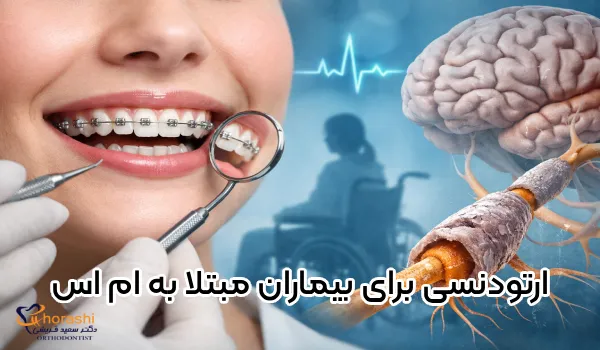
Is orthodontics possible for MS patients?
Quoted from NHS :
The progression of MS is highly variable and unpredictable. Metals used during orthodontic treatment can negatively affect imaging methods used to diagnose and monitor the progression of MS, while medications used to treat MS can negatively affect the movement of teeth in orthodontics.
For this reason, orthodontics is generally not recommended in MS patients. However, in cases where orthodontic treatment is necessary, it must be done in close consultation with the attending physician and orthodontist in order to maintain the patient's safety and minimize possible complications.

For patients with MS, the choice of orthodontic method should be done more carefully so that both the treatment is effective and the comfort and safety of the patient is maintained. Some methods are more suitable for this group:
self-ligating braces do not require elastic and the friction between the wire and the bracket is less, so tooth movements are smoother and the need for frequent visits is reduced, which is suitable for patients with fatigue or limited mobility.
Invisible orthodontics class="ez-toc-section-end">
The aligners are mobile and light, and the patient can easily remove them to maintain better oral hygiene. Easy use and no need for complex settings in invisible orthodontics makes physical pressure and stress less for MS patients.
In patients with limited mobility, it is better to use systems that do not require complex daily care or frequent adjustments to make the treatment process simple and safe.
The main focus in choosing the method is safety, comfort and the possibility of oral hygiene, not just the speed of the treatment. By choosing the right method, MS patients can benefit from orthodontic treatment and have a positive and stress-free experience.
Orthodontic treatment for MS patients can be associated with some challenges, knowing them helps to plan better and safer:
-
- Weakness or limited movement: Muscle problems or imbalance can make brushing and oral hygiene difficult.
- Persistent fatigue: MS patients may not have enough energy for daily orthodontic care.
- Sensitivity to medications: Some medications used in MS may affect the health of the gums or jawbone.
- Disturbance in mouth and jaw coordination: Nerve or muscle problems can complicate the process of moving teeth.
- Unexpected reactions with orthodontic appliances: In some patients, the appliances may cause more irritation or discomfort.
Knowing these challenges before starting treatment allows the orthodontist to design a personalized and safe plan to achieve both desired results and a comfortable and stress-free patient experience.
Concluding remarks
Orthodontics for patients with MS is a sensitive path that requires high precision. The main goal is to preserve the patient's health and prevent complications, not just to arrange the teeth at high speed. If orthodontic treatment is necessary, close cooperation between the patient, the treating physician and the orthodontist is the key to success. With careful planning, choosing the right method and following special care, MS patients can enjoy the benefits of orthodontics, without affecting general health or the course of the disease.
Dr. Saeed Qureshi
Dr. Saeed Qureshi, an orthodontic specialist with more than 20 years of experience in the treatment of jaw and teeth abnormalities, is the first member of the specialized board of the country, has the specialized board of orthodontics from Canada and is a member of the American Association of Orthodontics (AAO). To book an appointment and receive advice, you can visit any of the three specialized orthodontic centers in Tehran (located in Saadat Abad, Tehran Pars and Nawab areas) or the Qom orthodontic office under their management.
How do you rate the writing?