
Dependency Schema: When you are unable to make decisions without others

Dependency Schema: When You Can't Make Decisions Without Others
Dependency Schema: When you are unable to make decisions without othersWhat is dependency schema? Why are we always looking for support?
Sometimes it happens in life that we feel that we cannot cope with some tasks alone and we need an external support. This feeling, if it comes to us occasionally and in difficult situations, is completely normal; But if it takes root in our mind and behavior in a permanent and pervasive way, it may be the result of an unhealthy psychological pattern.
Have you ever felt that you need the presence or approval of others to make a decision or do something? Or even sometimes you don't have the courage to take an independent step for fear of making a mistake? If these experiences are familiar to you, maybe traces of dependence schema have settled in your mind.
Schemas are mental maps that are formed inside us from childhood and in interaction with the people around us. One of these maps is the dependency schema; A hidden pattern that makes us think we are weaker than we really are and depend on others to do things.
This article, which is prepared from the collection of specialized materials of Pirozih Psychology Clinic, deals with the complete investigation of dependency schema, its roots and symptoms. If you are interested in knowing how this mental pattern affects your life, stay with us.

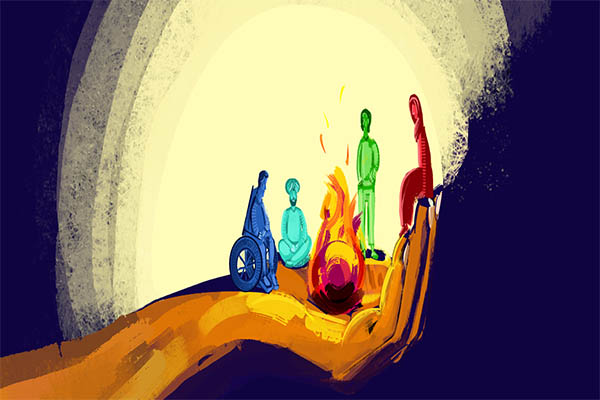
What does dependency schema mean?
In the hearts of many people who constantly rely on others, a deep and hidden belief has taken root: "I can't survive alone". This belief is the result of two powerful psychological forces that, together, create an unhealthy schema: feeling powerless against challenges and the constant need for a supporter.
People who are involved with the dependency schema, usually feel confused, fearful and passive when faced with problems. For this reason, they try to stay attached to people close to them, such as parents, romantic partners, close friends, bosses or even therapists. They unconsciously believe that without these people, their lives will go out of control.
These people usually look for a quick and convenient solution instead of working on the inner roots of the problem. Maybe they expect someone to come and solve all their problems or put a ready solution in front of them; But behind this apparently simple hope, complex pains such as anxiety, sense of emptiness, depression and fear of rejection are hidden.
Getting out of the dependency schema does not happen by looking outside. As long as one seeks only to turn off the symptoms instead of fighting the roots of this schema, change will not occur. The focus point should be shifted from "needing others" to "believing in one's own ability". This is the only way to overcome this schema and achieve true independence.
Dependency Schema Markers
If you are constantly looking for someone to tell you what to do in various situations in life or you are always waiting for approval from others, you may be involved in a dependency schema.
People involved with this scheme:
🔸 They always feel that they cannot survive without the presence or help of others.
🔸 They have low self-confidence in making decisions and are constantly wandering between options.
🔸 They think that without the support of others, they have no way to manage affairs.
Responsibility is scary for them and they usually run away from it.
🔸 In social relationships, they prefer to be passive and submissive so as not to upset anyone.
If these characteristics are familiar to you, it is better to take a deeper look at your mental patterns.
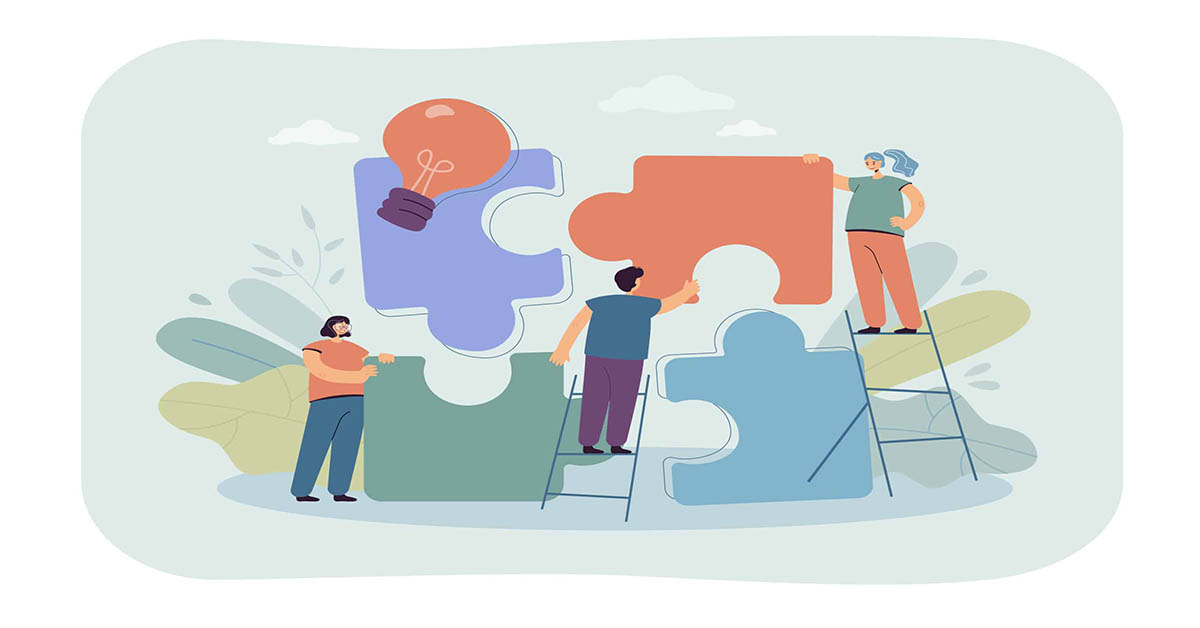
The origin of the formation of the dependency schema
No one is born with a sense of helplessness and a need for support. This mental pattern is formed in the child's heart over time and under the influence of parents' behavior and continues until adulthood. The dependency schema also originates from exactly this: from experiences in childhood that were either accompanied by extreme support or the lack of it.
🔻 When too much support "suffocates" you
Sometimes, with good intentions, parents do everything for their child, constantly make decisions for him and don't even allow him to make mistakes. The result of this upbringing is a child who feels that he cannot handle even the smallest tasks without the guidance or help of others.
Behaviors that affect this path:
- Taking all the decisions from the child.
- Permanent interference in his personal affairs.
- Not giving responsibility and independence to the child.
- Belittling his opinions and choices.
🔻 When your child goes to Taraj
On the other hand, some children don't taste support at all. They grow up in a situation where they have to make decisions like adults, do things on their own and live without support. These early pressures later appear in the form of a feeling of helplessness and a constant need for a supporter.
Signs of this type of education:
- Parental neglect and child abandonment.
- Delegating responsibilities heavier than the child's age.
- Deprivation of emotional support, guidance and consultation.
- Misplaced and adult expectations from the child.
Whether the child has stayed too long in the safe arms of the family or has been thrown into the world of homelessness prematurely, both experiences can become the basis for the formation of a dependency schema; A trap that makes a person doubt his abilities as an adult and keeps him dependent on others.
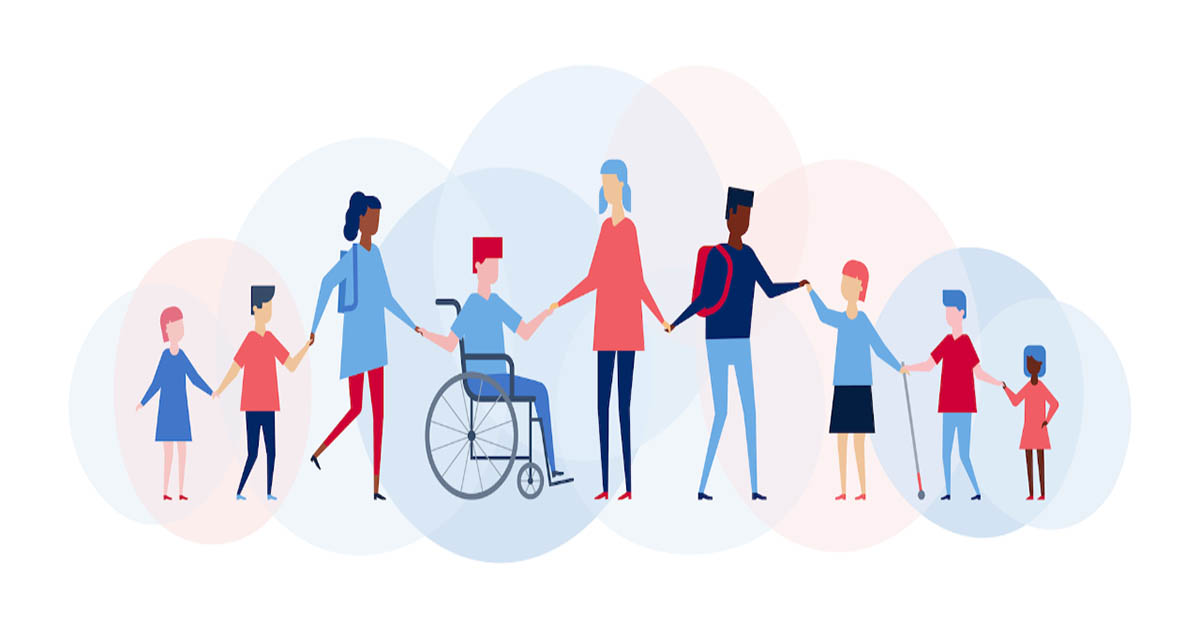
Why should we get rid of dependency schema?
When a person engages in a dependency schema, his ability to perceive reality is altered. His thoughts and perceptions of situations become distorted, which ultimately leads him to make decisions that are not in line with the truth and his real needs. These wrong decisions become the basis of serious problems in the path of life.
Dependency schema can have devastating effects if left untreated, especially in critical choices such as marriage. A dependent person may enter into an unhealthy relationship just because they cannot imagine themselves without the presence of another person, and even if it is traumatic, they may not be able to get out of it.
On the other hand, feeling unable to manage life alone erodes self-confidence and makes a person very vulnerable to disorders such as anxiety and depression. For this reason, getting rid of the schema of dependence and regaining a sense of personal sufficiency is an essential step to build a balanced, independent and healthy life.
Solutions to get rid of dependency schema
To deal with the dependency schema, you can use different treatment paths. In the following, some effective methods are mentioned that help people gain more psychological independence and leave this schema behind:
1. Facing the roots in individual therapy sessions
Regular referral to a psychotherapist can help a person identify the roots of their dependency schema and challenge dysfunctional thoughts about their personal disability. These meetings are a good opportunity for a person to get to know his real needs and focus on self-knowledge and self-care instead of dependence.
2. Hanging out with people with similar experiences in support groups
Participating in circles where people have similar experiences can be very effective. Talking with these people, in addition to reducing the feeling of loneliness, strengthens social skills and learns healthier coping methods. These environments often provide a platform for increasing self-confidence and personal growth. 3. Recreating everyday behaviors One of the key steps in the treatment of dependence schema is the reconstruction of destructive behavior patterns. With the help of the therapist, the person learns how to replace dependency-oriented behaviors with more independent ways; Including the practice of saying "no", maintaining privacy and creating clear boundaries in relationships. 4. Caring about yourself, not the approval of others To break out of emotional dependence, self-care must become a principle. This care can include exercise, adequate sleep, healthy nutrition, taking care of mental health and creating times for personal relaxation. Finally, since each person's experience is unique, the treatment path should also be personalized. The best way is to consult with a knowledgeable and compassionate specialist so that a program can be set up that fits individual characteristics. In this article, we examined the schema of dependence and pointed out how this schema is formed and what effect it has on a person's behavior and feelings. Dependent mentality, if not guided in a healthy way, will gradually make a person consider himself worthless and imagine that he is not capable of making decisions or managing life without the presence of others. This type of dependence not only weakens self-esteem, but also makes a person weak and hesitant in the face of challenges. While a healthy dependence on others can create a sense of security and belonging, an unhealthy version of it questions self-confidence and makes a person always look to others to make a decision or confirm themselves. If the dependency schema is not treated in time, it can cause many emotional, psychological and interpersonal problems. If you feel that you are involved in the schema of dependence and need help to get rid of it, Piriz Psychology Clinic is ready to accompany you with the help of experienced specialists in the field of schema therapy. With the help of the psychotherapists of this center, you can start the path of psychological independence and learn the necessary skills to make decisions, determine personal boundaries and strengthen self-confidence. Change is possible; Just take the first step. Yeproozi contact number: 
Concluding remarks
Make an appointment:
To receive individual advice from the specialists and consultants of Pirouzih Clinic, just call the following numbers:
 02177431649
Qaitariya contact number: 02126456903
02177431649
Qaitariya contact number: 02126456903
Working hours
days of the week
8:00 – 17:00
Thursday
with coordination
Friday
Holiday
href="tel:+982177431649">021-77431649
Latest content
Behzadi2025-10-16T21:31:24+00:00Behzadi2025-10-16T21:31:24+00:00 October 16th, 2025|no View
Why do some people avoid intimacy? Getting to know the avoidant attachment style is one of the behavior patterns that is rooted in the early life, the avoidant attachment style. The way people to establish [...]

The effect of forgiving betrayal on mental health and emotional relationships
amini2025-08-25T16:04:14+00:00 August 21st, 2025|No view
Can betrayal be forgiven? A psychological look at forgiveness of betrayal. Facing betrayal in an emotional relationship can be one of the heaviest and most complex experiences in life. When trust [...]
Daily visit: 3Register an appointment
You can set up a consultation session through this button...
make appointment amini2025-07-19T00:23:44+00:00Clinic Address
Tehran Province, Tehran, Piroozi St, MFVR+298, IranBranch 1:
Pirooz Branch
No. 1278, No. 1278, 3rd floor - Unit 7, at the beginning of Abuzar Blvd., Pirizi St., Tehran
Contact us
Saturday to Wednesday: 9 am to 9 pm
Yeproozi contact number:
02177431649
Qaitariya contact number: 02126456903
Andrezgo Blvd., between Kaveh Blvd. and Qaitarieh Blvd., in front of the Proud Mosque, No. 134, 2nd floor, unit 3

Pirouzi Clinic is always by your side to achieve your growth and mental health...
About Us
Piirozi Clinic is a center dedicated to personal growth and personal development and skilled psychologists here They play a very important role. This field is dedicated to training people to achieve goals and win in life. Using modern psychological techniques and their experiences, our psychologists provide solutions for the mental and social problems of the clients.
مقالات دیگر از Mohammad Pirizi

چرا تنبیه بدنی کودک اشتباه است؟
چرا تنبیه بدنی کودک اشتباه است؟ چرا تنبیه بدنی کودک راه حل نیست؟ پیامدهای تنبیه بدنی کودک تنبیه بدنی کودک، یکی از رایج ترین و در عین حال آسیب زاترین روش ه...

تاثیر بخشش خیانت بر سلامت روان و روابط عاطفی
تاثیر بخشش خیانت بر سلامت روان و روابط عاطفی آیا می توان خیانت را بخشید؟ نگاهی روان شناسانه به بخشش خیانت مواجهه با خیانت در یک رابطه عاطفی می تواند یکی از س...

چرا بعضی ها از صمیمیت فرار می کنند؟ آشنایی با سبک دلبستگی اجتنابی
چرا بعضی ها از صمیمیت فرار می کنند؟ آشنایی با سبک دلبستگی اجتنابی چرا بعضی ها از صمیمیت فرار می کنند؟ آشنایی با سبک دلبستگی اجتنابی یکی از الگوهای رفتاری که ر...

نشانهها و تاثیرات خاموش طرحواره بازداری هیجانی بر زندگی
نشانهها و تاثیرات خاموش طرحواره بازداری هیجانی بر زندگی وقتی احساساتت را قورت میدهی: نگاهی به طرحواره بازداری هیجانی آیا تا حالا تجربه کردهاید که نتوانید اح...

Treatment of children's learning disorders
Treatment of children's learning disorder Specialized workshop for diagnosis and treatment of learning disorders Important fields of psychology, educational sciences, educational technology, teache...

What is therapy and how does it help us?
**There are different types of treatment, each of which can have different effects on different people.** Counseling sessions can be useful for any person for many reasons... better self-knowledge, r...

Painless suicide
Painless suicide It refers to genes that direct the cell towards programmed death and force it to kill itself. It causes programmed cell death.False beliefs about suicide **false beliefs:** 1... S...

Necessary preparations for marriage
Necessary preparations for marriage One of the necessary preparations for marriage that couples think about is financial preparation, but they do not pay attention to the most important thing, which...

The effect of negativity on the mind
The effect of negativity on the mind Negativeness or the impact of bad events is anything that has a negative and bad nature, such as unpleasant thoughts, negative feelings towards events, etc. It is...

How to have a successful marriage?
How to have a successful marriage?... To know "how to have a successful marriage?" Maybe it's better to first know what marriage is... Marriage means signing an official contract during which both par...

The effect of exercise on mental health
**Effect of exercise on mental health** The effect of exercise on mental health is one of the things that we may have heard less about... In fact, we are all familiar with the benefits of exercise fo...

Feeling rejected
Reject | Types and ways to deal with it Rejection is an internal feeling that a person is experiencing the feeling of being rejected, the idea of being abandoned, not being wanted, not being loved, a...

SEO site management services
Search engine optimization (SEO) services help you to rank your website higher in the search results of Google and other search engines.

Implementation of branding and digital advertising
Digital branding means creating a strong and distinctive brand in the digital space for a company or a specific product. This process involves using digital methods and strategies to build and strengthen the brand.

Website design for companies and businesses
Website design for companies and businesses can help you have a stronger online presence and attract more customers. Contact us for more information.
